

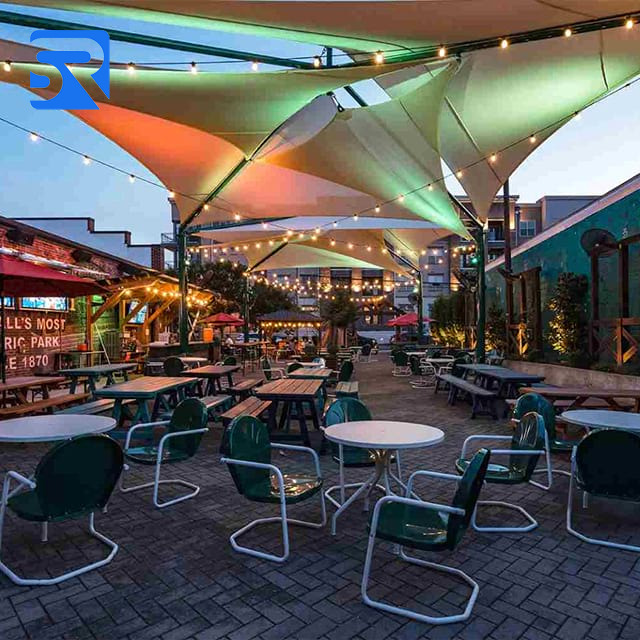
Selecting the wrong shading material for large-scale commercial, agricultural, or residential projects carries significant operational and financial risks. Crop damage, unusable patio spaces, and premature material failure often stem from improper fabric specification. Buyers face a complex procurement process when sourcing large volumes of shading material. Calculating exact yardage requires precision. Choosing between standard bulk rolls and custom fabrication impacts project timelines. You must balance upfront material acquisition with long-term structural durability.
This guide serves as a technical evaluation framework for project planners and facility managers. It helps buyers calculate precise dimensions for tensioned structures. You will learn how to assess material specifications based on environmental demands. We also navigate wholesale procurement structures for outdoor shade cloth to optimize your purchasing strategy. Understanding these variables ensures successful installation and maximizes the lifespan of your shading assets.
Key Takeaways
Material Construction Dictates Lifespan: Knitted High-Density Polyethylene (HDPE) resists unraveling when cut, handles wind tension better than traditional woven fabrics, and provides essential water and air permeability.
Precision Sizing Prevents Waste: Properly calculating yardage requires factoring in fabric stretch (typically 1-3%), tensioning hardware gaps, edge finishing allowances, and complex geometries (like three- or four-sided sails).
Bulk vs. Custom Economics: Purchasing an outdoor shade cloth wholesale roll significantly reduces cost-per-square-foot but requires in-house cutting and finishing, whereas custom panels eliminate labor but carry higher upfront premiums.
Application-Specific Densities & Colors: Selecting the correct UV block percentage (ranging from 30% for agriculture to 95% for privacy protection) and color profile is the most critical factor in project success.
Establishing Success Criteria for Outdoor Shade Cloth
Assessing Shade Percentage Requirements
Shade percentage and UV blockage represent two different technical metrics. Shade percentage measures the amount of visible light blocked by the fabric. UV blockage measures the restriction of harmful ultraviolet radiation. A fabric can offer 70% shade while providing 95% UV protection depending on its chemical additives and color. You must define both requirements based on the specific application before ordering material.
Different environments demand specific light transmission levels. Using the wrong density leads to stunted plant growth in agricultural settings or inadequate human comfort in architectural applications. Facility managers must match the fabric density to the primary function of the space. A nursery growing ferns requires vastly different light filtration than a municipal playground.
Application Type | Recommended Shade Percentage | Primary Function and Field Benefit |
|---|---|---|
Vegetables & Greenhouses | 30% - 50% | Allows high light transmission for photosynthesis while reducing heat stress on leaves. Prevents soil from drying out too rapidly. |
Sensitive Plants & Livestock | 60% - 75% | Provides moderate cooling and protects animals from direct solar radiation. Ideal for cattle feedlots and poultry runs. |
Commercial Patios & Pergolas | 85% - 95% | Maximizes human comfort, blocks harsh glare, and offers privacy protection. Drops ambient temperature significantly. |
Windbreaks & Privacy Fencing | 90% - 95% | Reduces wind velocity across open fields or construction sites. Obscures visibility for security purposes. |
Knitted vs. Woven HDPE: Structural Trade-offs
Knitted shade cloth utilizes a specialized lock-stitch construction. Manufacturers loop continuous monofilament yarn together, creating a fabric that resists tearing or fraying when cut. Installers can modify knitted fabrics on-site without compromising structural integrity. If a branch punctures the canopy, the hole will not run or expand. Knitted HDPE offers superior breathability. It allows water and air to pass through freely. This permeability prevents dangerous water pooling during heavy rainfall, which often causes structural collapse in flat-pitch installations.
Woven shade cloth features a heavier, grid-like construction made from extruded flat tapes. It offers minimal stretch, making it highly dimensionally stable for specific framing. However, woven fabrics unravel quickly if punctured or cut without immediate edge binding. They resist water penetration, which creates severe wind sail effects and water weight issues. Woven materials suit static agricultural uses like greenhouse roofing where the material is fully supported by a rigid frame, rather than tensioned architectural structures suspended by cables.
The Functional Impact of Color Selection
Color choice directly affects heat retention and light spectrum transmission. The physical color of the fabric alters the microclimate beneath it. Light colors like sand, white, and yellow reflect solar heat. They create significantly cooler environments underneath by bouncing radiant energy away from the coverage area. These reflective properties make light colors ideal for human comfort applications, residential patios, and outdoor dining spaces.
Darker colors like black and green absorb heat. They do not cool the ambient air as effectively as lighter shades. However, dark colors often provide higher UV resistance. The carbon black additives used in dark fabrics enhance longevity against solar degradation. Agricultural operations frequently choose dark colors for their durability and specific light filtration benefits. Black shade cloth acts as a neutral filter, reducing light intensity without altering the light spectrum, which keeps plant growth cycles consistent.
Evaluating GSM (Grams per Square Meter) and UV Stabilizers
GSM measures the physical weight and density of the fabric. Higher GSM correlates directly to increased tear strength, puncture resistance, and overall longevity. A 340 GSM fabric withstands severe wind loads and flying debris better than a 150 GSM fabric. High GSM materials suit permanent commercial installations and tensioned sails. Lower GSM materials work well for seasonal agricultural use where workers deploy and retract the netting annually.
Raw polyethylene degrades rapidly under continuous sun exposure. Manufacturers must add UV-stabilized compounds during the extrusion process. These additives prevent the plastic polymers from breaking down, chalking, and becoming brittle. Without proper UV stabilizers, even high GSM fabrics will fail within a single summer. Always verify the inclusion of these chemical protectors before procurement. The thread used for sewing seams and edge webbing must also feature heavy UV stabilization, or the panels will split at the seams while the fabric remains intact.
Sizing and Yardage: Calculating for a Sun Shade Fabric Roll
Standard Roll Dimensions vs. Custom Shade Cloth Rolls
Manufacturers produce bulk rolls in standard dimensional increments. Common widths include 6, 8, 10, and 12 feet. Standard lengths typically run 100, 150, or 300 feet. Buying these raw dimensions requires on-site fabrication. Your installation crew must handle the cutting, seaming, and edge finishing internally. This approach works well for long, straight runs like agricultural fencing or massive greenhouse covers where aesthetics take a back seat to functional coverage.
Hybrid options bridge the gap between raw fabric and finished panels. Suppliers offer bulk rolls with pre-installed eyelets or grommets along the edges. This eliminates the need for manual grommet installation in the field. It speeds up deployment for long fence lines. Workers simply unroll the material and secure it to the chainlink or posts using heavy-duty zip ties or hog rings.
Ordering custom shade cloth rolls often yields a better return on investment despite the higher initial outlay. Custom rolls arrive pre-cut to specific widths or unique geometric shapes. This eliminates material waste. It also reduces expensive on-site labor hours. Complex architectural structures almost always require custom fabrication to ensure proper fit and tension. Factory fabrication ensures straight seams, properly reinforced corners, and exact dimensional tolerances that field crews struggle to match.
Accounting for Tension, Stretch, and Hardware Gaps
Knitted fabrics stretch under tension. You must account for this elongation during the sizing phase. Installers typically apply a tension allowance. They deduct 1 to 3 percent from the total span of the structural frame depending on the specific GSM and knit pattern. This deduction leaves room for turnbuckles, D-rings, and wire rope to pull the fabric tight without bottoming out the hardware threads.
Calculating the hardware gap ensures a taut, wrinkle-free installation. If the fabric matches the exact dimensions of the posts, you cannot apply tension. The material will sag and flap in the wind. Sagging fabric deteriorates quickly due to friction against the frame. Always measure the anchor points and subtract the required hardware lengths before cutting the fabric. For example, a 20-foot span requiring 12-inch hardware gaps on each side means the fabric must measure exactly 18 feet under full tension.
The Math: Converting Square Footage to Roll Yardage
Translating a 3D structural frame into 2D fabric yardage requires methodical calculation. Start by measuring the perimeter of your anchor points. Determine the total square footage of the coverage area. Factor in the stretch percentage of your specific knitted HDPE. Follow a strict sequence to avoid ordering insufficient material.
Measure the exact distance between all mounting posts using a laser measure for accuracy.
Subtract the hardware gap (usually 12-18 inches per corner) to find the final tensioned fabric dimension.
Calculate the area of the resulting shape to determine total square footage.
Divide the total area by the width of your chosen sun shade fabric roll to determine linear yardage.
Add a 10% waste factor for trimming, squaring edges, and potential field mistakes.
Three-sided triangle sails present complex geometric challenges. Four-sided square or rectangle sails are easier to calculate. Triangle sails require precise parabolic curves cut along the edges to maintain tension across the center of the fabric. We recommend using digital fabric calculators for precision. These tools account for edge curvature and material stretch automatically, preventing the center of the sail from sagging.
Large projects require joining multiple widths of fabric. You must account for seam overlaps. A standard structural seam requires 2 to 3 inches of overlap. Add this extra material to your total yardage calculations to avoid falling short during installation. If you need a 20-foot wide panel and your rolls are 12 feet wide, you will need two runs of fabric with a 3-inch overlap down the center.
Evaluating Outdoor Shade Cloth Wholesale and Bulk Pricing
Retail Cut-Yardage vs. Bulk Roll Economics
Buying pre-packaged retail sizes carries a high per-square-foot premium. Retail packages include the cost of individual cutting, finishing, and consumer packaging. Investing in full bulk rolls drops the unit cost significantly. Bulk purchasing shifts the labor of cutting and finishing to your internal team. You trade upfront capital for lower material costs.
Identify the breakeven point for your project. Calculate the total square footage required. Compare the cost of multiple custom cuts against a single bulk roll. A bulk roll becomes more cost-effective when your project exceeds 500 square feet. The surplus material from a bulk roll also serves as backup for future repairs. Having matching material on hand prevents aesthetic mismatches if a section gets damaged by a falling branch.
Factors Influencing Wholesale Costs
Raw material quality dictates the baseline invoice. Virgin HDPE costs more than recycled HDPE. Virgin material offers superior molecular strength and longer lifespan. Recycled plastics degrade faster and exhibit inconsistent stretch profiles, making tensioning difficult. Always specify virgin HDPE for permanent tensioned structures to ensure predictable performance.
Color additives and edge treatments impact the final tally. Custom colors require specialized manufacturing runs, increasing the unit rate. Pre-installed heavy-duty webbing or taped edges add manufacturing time. These enhancements raise the initial invoice but save significant labor costs during installation. Factory-sewn webbing is generally stronger and more consistent than field-applied edge tape.
Navigating MOQs and Freight Considerations
Dealing with outdoor shade cloth wholesale suppliers involves Minimum Order Quantities (MOQs). Manufacturers set MOQs to optimize their production lines. An MOQ might require purchasing five 300-foot rolls. Pool your project requirements to meet these thresholds. Consolidating orders across different facility zones helps satisfy MOQ demands without creating unnecessary dead stock.
Shipping bulk rolls presents logistical realities. Standard parcel services cannot handle 10-foot long, 150-pound rolls. You must arrange LTL (Less Than Truckload) freight. Receiving LTL freight requires a loading dock or a forklift. Ensure your facility has the heavy lifting equipment needed to unload and move these massive rolls safely. Attempting to hand-unload a 200-pound roll of fabric from a freight truck often results in worker injury or damaged material.
Customization and Implementation Realities
Specifying Edge Treatments and Hardware Integration
Raw fabric edges fail under wind loads. You must specify reinforced edges for any tensioned application. Heavy-duty seatbelt webbing sewn into the perimeter distributes tension evenly across the entire edge. Folded taped edges provide a double layer of material for hardware insertion but lack the ultimate tensile strength of webbing. These treatments prevent eyehole or grommet tear-out during severe storms.
Standard grommet spacing runs every 12 to 24 inches along the perimeter. Tighter spacing distributes wind shear more effectively. Material choice for grommets matters in corrosive outdoor environments. Brass grommets resist rust but can oxidize and turn green over time. Marine-grade 316 stainless steel grommets offer the highest resistance to corrosion, especially in coastal areas exposed to salt spray.
Installation Hardware Compatibility
Successful deployment requires a robust hardware ecosystem. Perimeter wire rope threaded through the edge webbing provides structural rigidity and prevents the edges from bowing inward. Stainless steel D-rings sewn into the corners serve as primary anchor points. Turnbuckles connect the D-rings to the mounting posts, allowing for precise tension adjustments as the fabric settles over its first few weeks of deployment.
Retractable setups require specialized track systems. The fabric must integrate with sliding pulleys or wire guides. Ensure your chosen fabric weight is compatible with the retraction hardware. Heavy 340 GSM fabrics may jam lightweight track systems designed for residential use. Match the hardware load ratings to the maximum potential wind force on the fabric to prevent catastrophic hardware failure.
Common Failure Points and Mitigation Strategies
Wind shear damage represents the primary risk to shade structures. Sudden gusts exert massive force on the fabric and anchor points. Improper tensioning leads to water pooling. Sagging fabric catches rain, creating hundreds of pounds of downward force that bends steel posts. Abrasion from structural friction wears holes through the material quickly if the fabric rubs against a rafter.
Implement specific mitigation tactics. Install breakaway hardware that releases before the structural posts bend under extreme loads. Utilize highly breathable knitted fabrics in high-wind zones to allow air to pass through, reducing the sail effect. Pad any structural beams that contact the fabric to eliminate friction points. Regular tension checks prevent sagging and subsequent water pooling. Tighten the turnbuckles after the first major storm to remove any initial material stretch.
Conclusion
Measure your exact structural footprint and anchor points using a digital fabric calculator to ensure precise yardage requirements.
Request physical material samples to verify GSM density, stretch profile, and color accuracy under your specific site lighting.
Contact wholesale suppliers to confirm MOQs and secure LTL freight shipping quotes for your required roll dimensions.
Evaluate your on-site equipment to ensure you can safely receive, unload, and handle heavy bulk rolls without risking worker injury.
FAQ
Q: What is the best shade percentage for patios vs. greenhouses?
A: Commercial patios and residential pergolas require 85-95% shade cloth to maximize human comfort, block glare, and provide privacy. Standard greenhouse applications require 30-50% shade cloth to allow sufficient light transmission for plant photosynthesis while reducing heat stress.
Q: Does water go through outdoor shade cloth?
A: Yes, breathable knitted HDPE fabrics allow water and air to pass through freely. This permeability prevents structural damage from water pooling during heavy rain and reduces wind sail effects during storms.
Q: How long does a high-density polyethylene (HDPE) sun shade fabric roll last?
A: UV-stabilized virgin HDPE typically lasts 7 to 10 years. Lifespan depends heavily on the local climate, color choice, and maintaining proper installation tension to prevent wind abrasion.
Q: Can you cut a bulk shade cloth roll without it unraveling?
A: Knitted shade cloth features a lock-stitch construction that can be cut without unraveling. Woven shade cloth, however, will fray and requires immediate edge binding or taping after cutting.
Q: What is the difference between custom shade cloth rolls and standard bulk rolls?
A: Standard bulk rolls provide raw, unfinished yardage in set dimensions. Custom rolls are cut to your exact project dimensions and often feature factory-finished edges, reinforced webbing, and pre-installed grommets.
Q: How far apart should grommets be on outdoor shade cloth?
A: We recommend spacing grommets 12 to 24 inches apart along the perimeter. Tighter 12-inch spacing is necessary for high-wind areas to distribute tension evenly and prevent edge tear-out.


