


Controlling a microclimate requires more than just blocking sunlight. The physical properties of your barrier material directly dictate ambient temperature, light quality, and soil moisture retention. Selecting the wrong shade material can inadvertently trap heat, damage heat-sensitive crops, accelerate soil evaporation, or reduce Photosynthetically Active Radiation (PAR). This leads to yield loss and increased cooling costs. We see growers make this mistake constantly. They throw up a dark net over a low tunnel and wonder why their tomatoes bake. You need to understand the technical comparison between black and white shade materials. We will look at thermodynamics, light diffusion, and application-specific performance. This data-backed approach guides your purchasing decision. You must match the fabric to your specific structural ventilation and crop requirements.
Thermodynamic Differences: Black materials absorb heat and block light, while white materials reflect heat and diffuse light, fundamentally altering the microclimate beneath them.
Application Specificity: White is generally superior for extreme heat mitigation, enclosed greenhouses, and preserving soil moisture, whereas black is highly effective for dense open-air agricultural shading, livestock protection, and heat retention in cooler climates.
Beyond Color: The effectiveness of any shade installation relies heavily on selecting the correct shade percentage (density) and ensuring adequate structural ventilation.
Commercial Viability: Upgrading to specialized commercial shade cloth requires balancing upfront material costs against projected gains in crop yield, water conservation, and reductions in active cooling expenses.
The Physics of Shade Cloth: How Color Dictates Microclimates
Heat Absorption vs. Reflection
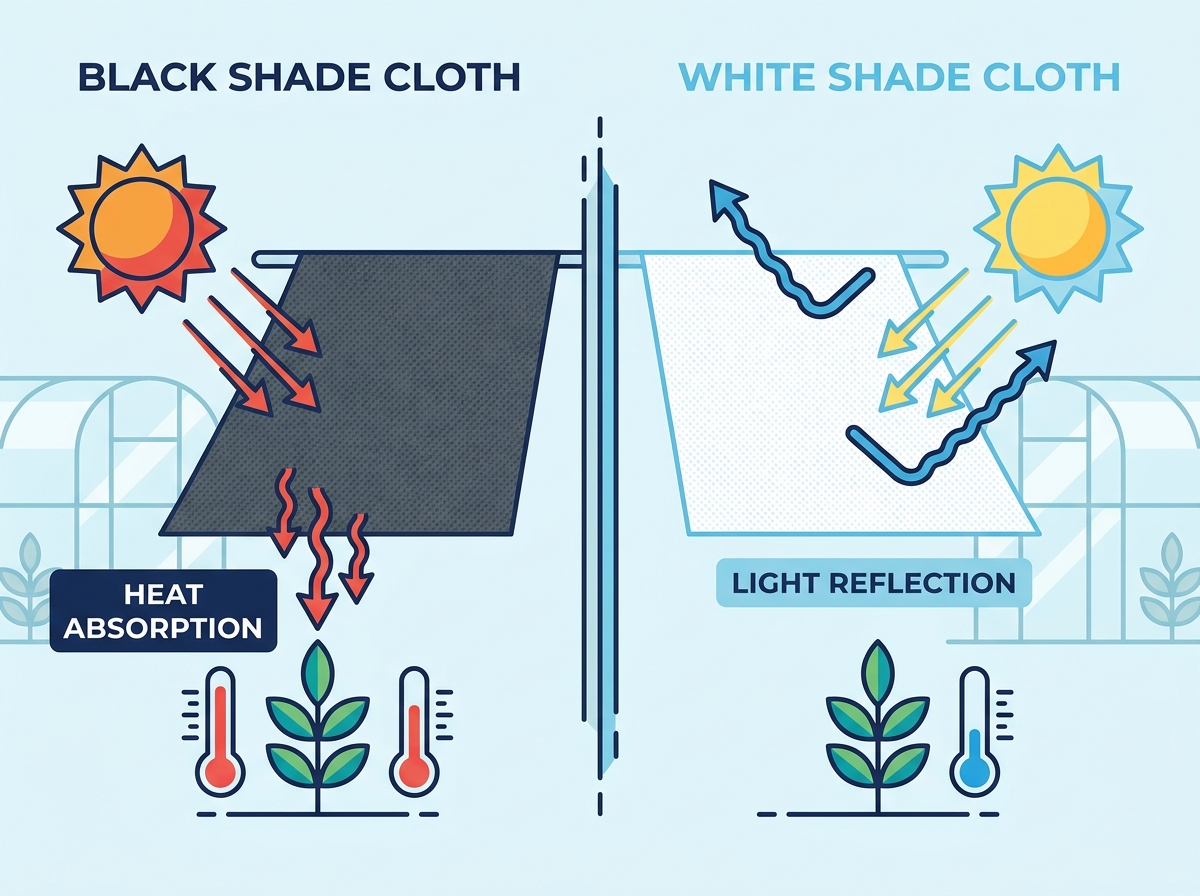
Thermodynamics dictate how agricultural environments function under solar load. A shade cloth acts as a thermal barrier, but its color determines exactly how it processes incoming solar radiation. Black materials absorb heat. When sunlight hits dark polymer threads, the solar energy converts directly into thermal energy. This absorbed heat transfers to the surrounding air through convection and radiation. If you install dark materials over an enclosed greenhouse with inadequate ventilation, internal temperatures will actively increase. You effectively turn the structure into a solar oven. Reflective materials operate on the principle of high albedo. They bounce a significant portion of solar radiation away from the growing area. This reflection actively lowers the ambient temperature beneath the canopy. In extreme heat conditions, reflective materials provide significantly more effective cooling by preventing thermal energy from entering the microclimate.
We measure this difference in the field using infrared thermometers. On a 95-degree day, the surface temperature of a dark net can exceed 130 degrees Fahrenheit. That heat radiates downward. A white net in the exact same conditions might only register 100 degrees. That 30-degree surface differential completely changes the ventilation requirements for the structure below.
Material Color | Solar Energy Processing | Ambient Temperature Effect | Primary Agronomic Benefit |
|---|---|---|---|
Black | Absorbs radiation and converts to heat | Increases ambient heat if poorly ventilated | Maximum light restriction and durability |
White | Reflects radiation away from canopy | Actively lowers ambient temperature | Heat reduction and light diffusion |
Light Diffusion and PAR Quality
Light quality drives plant development just as much as temperature control. Dark threads create distinct micro-shadows. They block light entirely where the thread sits, casting sharp, high-contrast shadows on the foliage below. This characteristic makes dark materials ideal for dense shading requirements where total light reduction is the primary goal. White threads scatter and diffuse light as it passes through the woven or knitted gaps. This diffusion improves the agronomic environment by allowing light to penetrate deeper into the lower plant canopy.
Diffused light enhances overall photosynthetic efficiency. It activates more leaf surface area without causing light burn on the upper canopy leaves. When you walk into a greenhouse covered in white netting, the light feels even and bright, lacking harsh shadows. This scattered light reaches the lower stems and leaves that normally get shaded out by the upper canopy. For crops like tomatoes and cucumbers, this means better fruit set and ripening lower down on the vine.
Impact on Soil Moisture and Evaporation
Installing a protective canopy shields soil from direct solar baking. Both colors reduce evaporation by blocking direct sunlight, but their secondary thermal effects differ drastically. Because reflective materials offer superior ambient cooling properties, they further lower topsoil temperatures. Cooler topsoil results in higher soil moisture retention during peak summer months. This reduction in evaporation directly decreases irrigation demands.
Keeping root zones stable and hydrated makes plants less susceptible to drought stress. Maintaining consistent soil moisture also preserves the integrity of the soil microbiome. Beneficial bacteria and fungi thrive in stable, cooler conditions. When topsoil bakes under a dark net radiating heat, the upper two inches of soil dry out rapidly, killing off beneficial microbes and stressing shallow feeder roots. Reflective netting prevents this topsoil crusting.
Evaluating Black Shade Cloth: Strengths, Limitations, and Use Cases
Performance Advantages
Using black shade cloth offers high UV resistance and historical longevity in harsh outdoor environments. Manufacturers use carbon black additives during the extrusion process. These additives naturally stabilize the polyethylene against ultraviolet degradation. This material is highly cost-effective and widely available in various densities ranging from 30% to 90%. It remains superior for dense shading applications where light restriction is paramount.
Growers rely on it for protecting shade-loving ornamentals or creating comfortable outdoor living spaces. It also provides utility in heat retention during cooler months. It helps mitigate nighttime temperature drops. You can intentionally warm a greenhouse in winter by absorbing daytime solar radiation and radiating that heat downward as ambient temperatures fall. The durability of carbon-stabilized polyethylene means these nets often last seven to ten years in the field with proper tensioning.
Implementation Risks
The primary risk involves heat trapping and thermal damage. Using dark materials directly over poorly ventilated greenhouses, raised garden boxes, or low hoops in peak summer bakes plants. The material absorbs heat and radiates it downward into the enclosed space. Without sufficient airflow to carry this excess heat away, the microclimate temperature spikes rapidly.
This actively damages a garden. It causes severe heat stress, blossom drop, and wilt in sensitive crops. We see this failure constantly in residential setups. A grower drapes a dark net directly over a PVC low tunnel. The air inside stagnates, the net heats up to 120 degrees, and the lettuce bolts immediately. You must prioritize active ventilation, roll-up sides, or high clearance when deploying dark materials in high-temperature zones.
Ideal Deployment Scenarios
You should deploy dark netting in specific environments where heat accumulation is either desired or easily managed through massive airflow. The best applications include:
Open-air nurseries where wind moves freely through the structure.
Livestock shading structures with high roofs and open sides.
Winter greenhouse warming in northern climates.
Geographic regions with moderate summers where extreme heat mitigation is not the primary operational goal.
Protecting shade-obligate plants like ferns and orchids requiring 70% to 90% light blockage.
Evaluating White Shade Cloth: Strengths, Limitations, and Use Cases
Performance Advantages
Reflective materials significantly drop ambient temperatures compared to dark materials of the exact same density. This cooling effect rescues heat-stressed gardens from thermal damage during peak summer heatwaves. The light scattering benefits are particularly valuable for high-value, light-sensitive crops. By diffusing sunlight, plants receive adequate PAR without the stress of intense direct beams.
A major secondary benefit is the reduced irrigation demand due to lower evaporation rates in the cooler microclimate. Using white shade cloth allows growers to maintain active growth cycles even during the hottest months of the year. It prevents the summer slump commonly seen in vegetable production. When temperatures exceed 90 degrees, tomatoes drop their blossoms. Reflective netting keeps the canopy temperature just below that threshold, ensuring continuous fruit set.
Implementation Risks
Reflective netting does come with specific operational challenges. The most obvious drawback is the higher visibility of dirt, dust, and algae buildup over time. A white net looks pristine on day one but can look heavily soiled after a season of dust storms and rain. Reflective surfaces also create glare. This glare might be visually disruptive in certain residential or highly trafficked commercial settings.
These variants generally carry higher upfront costs compared to standard dark variants. You need a larger initial investment to cover the same square footage. If you use reflective materials in cooler climates, they can delay soil warming in the spring. Reflecting solar energy away from the soil surface pushes back planting schedules if you do not retract the netting during the early season.
Ideal Deployment Scenarios
Reflective netting excels in environments where heat reduction is the absolute priority. You should specify this material for the following setups:
High-heat geographic zones like the American Southwest or deep South.
Enclosed greenhouse roofs lacking sufficient active cooling capacity.
Cultivation of heat-sensitive crops like lettuce, spinach, and cool-weather brassicas during hot summer months.
Low-clearance structures like high tunnels or caterpillar tunnels where heat accumulation is a constant threat.
Seedling propagation houses requiring bright, diffused light without thermal stress.
Head-to-Head Evaluation Dimensions for Decision Makers
Structural and Ventilation Requirements
Color choice dictates how the material interacts with your existing infrastructure. Dark materials require greater clearance and active ventilation to dissipate absorbed heat. You must install them higher above the canopy to prevent radiant heat transfer. We recommend a minimum of three feet of clearance between a dark net and the top of the plant canopy. You also need ridge vents or high-capacity exhaust fans to pull the hot air out.
Reflective materials are far more forgiving in low-clearance setups. They work well over residential garden beds or low tunnels because they reflect heat rather than absorbing and radiating it downward. You can run a white net just 12 inches above a lettuce crop without baking the leaves. Regardless of color, all installations require sturdy framing and proper tensioning to withstand wind loads and prevent sagging. Loose netting flaps in the wind, abrading the plastic greenhouse film beneath it and reducing the lifespan of both materials.
Material Longevity and Degradation
Lifespan expectations vary based on construction and UV exposure. The industry standard dictates that dark UV-stabilized polyethylene often outlasts lighter colors due to the inherent stability of carbon black. However, premium commercial shade cloth is closing this gap rapidly. Modern manufacturing techniques incorporate advanced UV inhibitors and stabilizers.
These chemical additives allow reflective materials to withstand harsh solar exposure for extended periods. When evaluating longevity, knitted construction generally outlasts woven construction. Knitted polyethylene resists unraveling if torn or cut. You can push a pipe through a knitted net, and the hole will not run. Woven materials will fray rapidly if punctured, requiring immediate patching or replacement.
Cost-to-Outcome Ratio
Evaluating the return on investment requires looking beyond the initial purchase price per square foot. You must compare the lower initial cost of dark materials against the potential yield protection offered by reflective options. In extreme heat, reflective materials provide measurable water savings and reduced cooling costs. If you run exhaust fans 12 hours a day under a dark net, switching to a reflective net might cut that run time down to 8 hours.
Protecting a high-value crop from thermal damage often justifies the higher upfront investment in specialized reflective fabrics. Calculate the potential loss of a single crop cycle due to heat stress. If a heatwave wipes out a $5,000 tomato crop because the dark net trapped too much heat, the $200 you saved on the netting becomes irrelevant. Always buy the material that mitigates your highest environmental risk.
Scaling Operations: Selecting Commercial Shade Cloth
Customization and Density Selection
Procurement for large-scale operations involves specifying exact shade percentages alongside color selection. You must match the density to specific crop tolerances. Customization ensures the microclimate aligns perfectly with agronomic targets. Commercial suppliers offer specific dimensions, reinforced edges, and custom grommet spacing to facilitate rapid deployment across acres of infrastructure.
We use specific density targets based on the crop type. Tomatoes and peppers perform best under 30% density. This allows high light transmission for fruiting while taking the edge off the peak afternoon heat. Leafy greens like lettuce and spinach require 50% density to prevent bolting. Shade-loving ornamentals, ferns, and orchids need 70% to 80% density to prevent leaf scorch. You cannot guess these percentages. You must match the fabric density to the daily light integral (DLI) requirements of your specific crop.
Crop Category | Recommended Density | Preferred Color in High Heat |
|---|---|---|
Fruiting Vegetables (Tomatoes, Peppers) | 30% - 40% | White |
Leafy Greens (Lettuce, Spinach) | 50% - 60% | White |
Nursery Stock (Trees, Shrubs) | 50% - 60% | Black or White |
Shade Ornamentals (Ferns, Orchids) | 70% - 80% | Black |
Integration with Automated Systems
Commercial agriculture frequently utilizes retractable shade systems. Color choice impacts the deployment algorithms for these automated setups. Facility managers program systems to deploy reflective materials earlier in the day to maximize heat reflection during peak solar hours. This optimizes internal temperatures and reduces the load on active cooling systems.
Automated systems rely on precise tensioning. The physical weight and flexibility of the chosen material become critical factors during the design phase. Knitted reflective materials offer excellent flexibility, allowing them to bundle tightly when the motors retract the screen. Heavy woven dark materials can bind up in the tracks if not properly aligned. You must ensure the material weight matches the torque specifications of your drive motors.
Common Implementation Failures to Avoid
Conflating Color with Shade Percentage
A 50% white cloth and a 50% black cloth block the exact same amount of total light. They process the heat and light quality entirely differently. Never buy the wrong density simply because of the color. Determine the required light transmission first based on crop requirements, then select the color that addresses your thermal management needs.
Misunderstanding this distinction often leads to stunted growth from insufficient light or severe thermal damage from trapped heat. We see growers buy a 70% white net thinking the color will save their tomatoes, only to find the plants stretching and failing to fruit because they blocked too much light. Always lock in the percentage first, then pick the color.
Improper Installation Heights
Installing shade materials too close to the plant canopy is a frequent mistake. This happens constantly in raised garden boxes or small hoop houses. Tight installations restrict airflow and trap radiant heat. Inadequate clearance negates the cooling benefits of either color.
Ensure sufficient space between the fabric and the foliage to allow wind and ventilation systems to flush out warm air. A minimum clearance of 18 to 24 inches above the mature canopy height is required to maintain proper convective cooling. If the net touches the plastic greenhouse film, it transfers heat directly through conduction. Always maintain an air gap between the netting and the structure's primary glazing.
Conclusion
Assess your primary environmental threat before purchasing by determining if your main challenge is excess heat or excess light. Evaluate your structural ventilation capacity to ensure you have the necessary height and airflow to support your chosen material. Follow these specific steps to finalize your deployment:
Calculate the required square footage accurately to ensure complete canopy coverage without stretching or compromising the fabric.
Determine the optimal shade percentage based on the specific daily light integral requirements of your target crop.
Evaluate your structural clearance to ensure a minimum 18-inch air gap above the mature plant canopy.
Request technical specification sheets from suppliers to verify UV stabilization and material longevity before finalizing large orders.
FAQ
Q: Does white shade cloth keep a greenhouse cooler than black?
A: Yes. White materials reflect solar radiation away from the structure, actively lowering internal temperatures. Black materials absorb heat and can make an enclosed greenhouse hotter if ventilation is poor.
Q: Can black shade cloth burn my plants?
A: Yes. If installed too low over garden boxes without adequate ventilation, the radiant heat absorbed by the dark material transfers directly to the plants beneath it, causing severe thermal damage.
Q: Does shade cloth color affect soil moisture retention?
A: While both colors reduce evaporation by blocking direct sunlight, white's superior cooling effect lowers topsoil temperatures further. This results in significantly lower evaporation rates and better moisture retention.
Q: What percentage of shade cloth is best for vegetables?
A: Standard ranges for vegetables fall between 30% and 50%. Sun-loving crops like tomatoes thrive at 30%, while heat-sensitive greens like lettuce benefit from 50% coverage during peak summer.
Q: Is commercial shade cloth different from residential garden fabric?
A: Yes. Commercial options feature superior UV stabilization, heavy-duty knitted construction, and reinforced edges with brass grommets to withstand high winds and continuous agricultural use.
Q: Does the color of the shade cloth affect UV protection?
A: No. UV protection is determined by the material's weave density and the specific UV inhibitors added during manufacturing, not strictly by the color of the threads.
Q: How high above the plants should shade cloth be installed?
A: Install the material at least 18 to 24 inches above the highest point of the mature plant canopy. This clearance ensures adequate airflow and allows trapped heat to dissipate effectively.


