

Unsecured perimeters expose your operations to severe risks. You face costly project delays, heavy equipment theft, and extreme liability exposure. A basic barrier is never enough to protect your assets. Selecting the right Safety Fence requires careful planning. It represents a critical compliance and risk management strategy. Every site demands specific security protocols. You cannot treat perimeter protection as a generic purchasing decision.
This guide breaks down everything you need to secure your site effectively. We compare different fencing types across various industry applications. You will learn how to navigate complex OSHA regulations and local municipal codes. We also provide a clear framework for equipment procurement. You will discover exactly how to decide between renting or buying your perimeter infrastructure. By the end, you will confidently secure your construction site, agricultural property, or public area.
Key Takeaways
Compliance dictates specification: Local municipal codes and OSHA standards often mandate specific heights, footing types, and wind-load ratings for site perimeters.
Application determines material: Construction sites prioritize anti-climb rigid panels, farms require wide-area cost efficiency, and public events demand high-visibility crowd control barricades.
Duration drives ROI: The decision to rent versus purchase a safety fence hinges strictly on project timeline (typically a 6-to-12-month break-even point) and internal storage capacity.
Anchoring is the primary point of failure: Improperly weighted bases are the leading cause of fence collapse and subsequent liability claims.
Assessing Perimeter Risks and Compliance Requirements
You must clearly define the business problem before choosing your perimeter infrastructure. Unauthorized access creates massive financial vulnerabilities for any project. Heavy equipment theft costs developers millions of dollars every year. Missing machinery instantly halts project momentum and destroys profit margins.
Liability exposure presents an even greater financial threat. The "attractive nuisance" doctrine strictly holds property owners liable for injuries. This legal concept frequently applies to public-adjacent construction sites. Curious children or pedestrians may wander into unsecured zones. If they sustain injuries, your business faces devastating lawsuits. A professionally installed perimeter mitigates these catastrophic legal risks.
OSHA and Municipal Code Frameworks
Federal guidelines provide a baseline for workplace safety. However, local ordinances almost always override general safety recommendations. City inspectors enforce rigid specifications for site boundaries. They often mandate specific gate mechanisms and visual screening requirements. Many urban jurisdictions require opaque privacy screens to reduce neighborhood dust.
You must adhere to documented safety standards to protect your operations. Insurance companies demand strict compliance to maintain coverage. Failing to meet local codes triggers immediate consequences. You risk severe insurance premium hikes. Municipal inspectors can also issue instant site shutdown orders. A shutdown costs far more than a proper initial installation.
Evaluating Site-Specific Vulnerabilities
Every location presents unique environmental and operational challenges. You need to assess these factors before contacting a supplier. Use the following checklist to evaluate your site vulnerabilities:
Terrain conditions: Identify uneven ground, steep gradients, or soft soil surfaces.
Pedestrian proximity: Measure the distance between active hazard zones and public sidewalks.
Wind exposure: Determine if your site sits in an open corridor or high-altitude area.
Vehicle traffic: Map out where heavy delivery trucks will enter and exit.
Underground utilities: Locate buried pipes or cables before considering driven posts.
Evaluating Types of Temporary Safety Fence Solutions
Different environments require entirely different material specifications. A solution tailored for an agricultural boundary will fail in a busy urban intersection. You must match the system features to your desired operational outcomes.
Rigid Chain Link Panels
Rigid panels dominate the commercial building sector. They consist of chain link mesh stretched across durable steel frames. These units are entirely free-standing and highly durable. Crews can easily reconfigure the layout as the project advances. They work best for active urban construction sites requiring constant adaptation.
However, rigid panels carry notable limitations. They become highly vulnerable to wind loads if you attach privacy screens. The screen transforms the porous mesh into a solid sail. You must upgrade to engineered weighted bases if you use screening. Standard metal stands will fail during moderate storms.
Post-Driven Chain Link / Wire Fencing
Post-driven systems offer maximum perimeter stability. Crews pound metal posts deep into the earth. They then stretch tensioned wire or chain link across the boundary. This method makes the perimeter incredibly difficult to breach. It is ideal for long-term development sites and expansive agricultural perimeters.
This solution does have significant deployment restrictions. It requires an intrusive and permanent-feeling installation process. You cannot use post-driven systems on finished concrete or paved asphalt. It strictly requires raw earth or gravel surfaces.
Pedestrian Steel Barricades (Crowd Control)
Public events demand rapid deployment and distinct visual boundaries. Pedestrian steel barricades feature interlocking mechanisms and a low-profile design. Two workers can secure a large plaza in under an hour. These units excel at event queuing and directing foot traffic.
They effectively delineate safe zones from immediate hazard areas. While they offer excellent crowd guidance, they provide minimal physical security. Intruders can easily hop over them after hours.
High-Visibility Plastic / Snow Fencing
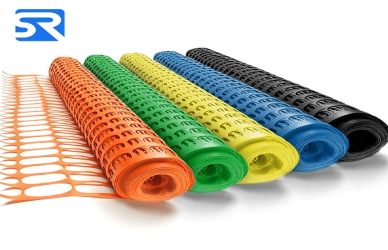
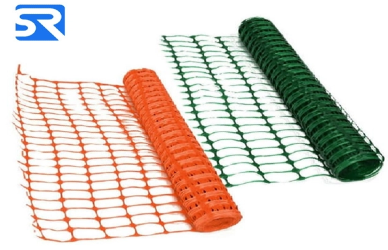
Plastic mesh provides an extremely low-cost boundary solution. The bright orange coloring serves as an immediate visual deterrent. Crews frequently use it for trench marking or temporary farm division. It rolls out quickly and requires minimal labor to secure.
You must understand its severe limitations. Plastic fencing offers absolutely zero physical security. It stops nobody from entering a restricted area. It functions purely as a visual warning boundary.
System Comparison Overview
System Type | Primary Application | Security Level | Key Vulnerability |
|---|---|---|---|
Rigid Panels | Urban Construction | Medium-High | Wind tipping (if screened) |
Post-Driven | Long-term / Agricultural | High | Surface damage, rigid layout |
Steel Barricades | Public Events / Queuing | Low | Easily bypassed vertically |
Plastic Mesh | Trench Marking | Zero | No physical resistance |

The Rent vs. Buy Decision Framework
Procuring a Safety Fence involves balancing upfront capital against long-term logistics. You should base this decision strictly on your projected timeline. Internal storage capacity also dictates whether ownership makes financial sense.
When to Rent
Renting is optimal for short-term projects lasting under six months. Most general contractors prefer to keep capital fluid. Renting eliminates the burden of equipment depreciation. It also solves major logistical headaches for lean operations.
You should rent if your business lacks flatbed transport vehicles. Transporting large panels requires specialized commercial trucks. You also need an off-season storage yard to house the equipment. Renting provides turn-key installation and essential emergency maintenance support. If a storm blows the perimeter down, the rental vendor fixes it.
When to Buy
Purchasing equipment yields strong returns for multi-year, phased developments. You hit a clear break-even point around the 12-month mark. Buying also makes sense for recurring operational needs. Seasonal farming setups frequently utilize the same boundaries year after year.
You must possess dedicated logistics infrastructure to justify buying. Organizations need ample warehouse space and capable fleet vehicles. If you control your transportation, owning the equipment dramatically lowers ongoing project costs.
Hidden Costs to Evaluate
Ownership carries several hidden expenses you must evaluate. You will inevitably incur panel repair fees. Heavy machinery frequently damages frames during active operations. You also face consistent lost hardware costs. Workers constantly misplace connection clamps and metal stands during teardown.
Finally, factor in the internal labor overhead of deployment. When you own the panels, your specialized crew spends hours erecting them. This takes them away from their primary, revenue-generating tasks.
Structural Integrity and Implementation Realities
A poorly implemented perimeter creates more liabilities than it solves. You must engineer the installation to withstand environmental pressures. Physical integrity determines whether your boundary actually protects the public.
Wind Load and Anchoring Mechanisms
Improper anchoring causes the vast majority of perimeter collapses. You have several options for stabilizing free-standing panels. Sandbags represent the traditional, low-cost approach. However, sandbags degrade rapidly over time. UV rays destroy the fabric, spilling sand across sidewalks. You must constantly replace them during long projects.
Concrete blocks offer much better longevity. They resist weathering but prove difficult to maneuver. Engineered weighted bases provide the best overall performance. They feature high-visibility colors and snap securely onto the frames.
You must address the extreme risk of adding privacy windscreens. Screens block airflow and act exactly like ship sails. They drastically increase tipping probability during storms. Never install windscreens without explicitly upgrading to heavy-duty anchoring systems.
Access Points and Gate Security
Your perimeter is only as secure as its weakest entry point. You must carefully evaluate pedestrian versus vehicle gate requirements. Vehicle gates span wide distances and handle heavy, repetitive usage. Pedestrian gates manage constant foot traffic and require distinct locking mechanisms.
Standard hardware often fails under job site conditions. Avoid using standard panel clamps to create makeshift gates. You must install proper heavy-duty hinges. Use thick padlocks protected by steel shrouds. Wide swing gates require specialized wheel supports. Without wheels, heavy gates sag into the dirt and become impossible to close.
Anti-Climb Considerations
Urban sites attract trespassers, vandals, and curious individuals. You must actively deter climbing attempts through smart material selection. Standard chain link provides easy footholds for agile intruders. To enhance security, select panels featuring narrow mesh apertures.
Tight mesh prevents boots from gaining traction. You should also strictly avoid frameworks with horizontal mid-rails. A mid-rail acts as a perfect ladder rung. Smooth, uninterrupted vertical spans provide maximum anti-climb protection.
Shortlisting Providers and Next Steps
Your relationship with a vendor extends far beyond the initial delivery. You need a responsive partner to maintain perimeter integrity. A downed boundary leaves you legally exposed until repairs finish.
Service Level Agreements (SLAs)
Scrutinize the Service Level Agreements before signing any contract. You need guaranteed response times for breached or fallen panels. High winds frequently knock over urban boundaries overnight. Ask vendors about their emergency stabilization protocols post-storm. Top-tier providers guarantee site visits within 24 hours of an incident.
Insurance and Permitting Support
Prioritize vendors who deeply understand local jurisdiction requirements. Navigating municipal bureaucracy drains massive amounts of administrative time. Excellent providers handle the bulk of this regulatory friction for you.
They should readily supply specialized engineering documents. City inspectors often demand certified wind-load ratings before issuing permits. If a vendor cannot produce structural engineering charts, find a different supplier.
Actionable Next Step
Do not simply guess your required dimensions. You must execute a structured site assessment before requesting quotes. Follow these exact steps:
Map the exact linear footage of the required boundary.
Identify all uneven terrain challenges and surface transitions.
Mark the precise locations for vehicle and pedestrian gates.
Calculate the distance to the nearest public walkway.
Initiate this site survey today. Accurate data ensures you receive precise quotes and proper structural recommendations.
Conclusion
Deploying a robust perimeter requires balancing physical security, legal compliance, and available budget. Your boundary serves as the primary shield protecting your operations from catastrophic liability. You cannot cut corners when public safety is involved.
Remember that an under-specced Safety Fence ultimately costs you more. The price of specialized engineering pales in comparison to legal settlements and municipal fines. Proper anchoring and anti-climb features save lives and protect your expensive equipment.
Your immediate next action is clear. Evaluate your precise project timeline. Review your local municipal codes regarding wind loads and screening. Then, schedule a comprehensive site survey to secure your required infrastructure.
FAQ
Q: Do I need a permit to install a temporary safety fence?
A: Yes, most urban municipalities require a specific permit before installation. Local codes vary significantly regarding right-of-way encroachments. If your boundary blocks a public sidewalk, you will likely need a special pedestrian rerouting permit. Always consult your local building department before deployment.
Q: What is the standard height for a construction site fence?
A: The standard height typically ranges between 6 and 8 feet. OSHA general guidelines accept 6-foot barriers for standard safety zones. However, many dense urban mandates strictly require 8-foot panels to prevent trespassing. Always verify the mandatory minimum height with your local city inspector.
Q: How much wind can a temporary panel fence withstand?
A: An unweighted stand usually tips at wind speeds around 15 to 20 mph. Properly braced and weighted panels can withstand gusts up to 45 mph. Adding a privacy windscreen drastically reduces wind resistance. You must double the base weight if you attach any solid screening.
Q: What is the most cost-effective temporary fencing for large agricultural perimeters?
A: Driven T-posts paired with woven wire offer the best cost efficiency for farms. This method drastically reduces material costs compared to rigid panelized systems. It secures large acreages effectively. However, it requires raw earth for installation and takes longer to extract.
Q: How do you secure temporary fencing on uneven terrain?
A: You must use specialized adjustable clamps to secure panels on slopes. Workers utilize a stepped installation method, shifting each panel slightly lower than the previous one. Adjustable, pivoting bases help maintain upright stability when the ground surface slopes aggressively.