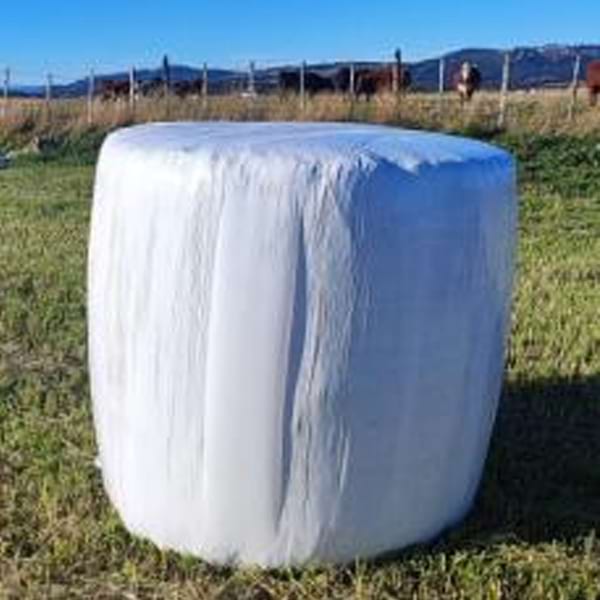


How many wraps per hay bale are enough for secure storage? Too few can loosen bales, while too many waste material. The right number depends on bale size, net quality, and baler settings. This guide explains how to calculate net consumption and achieve consistent coverage.
How Many Wraps Does a Hay Bale Need?
The number of wraps depends on the bale size and the baler's wrapping system. There is no single setting suitable for every machine. Farmers should consider the recommended rotation count and inspect the finished bale.
Recommended Number of Net Wrap Rotations for Round Hay Bales
Many round balers allow operators to adjust the number of net wrap rotations. A common starting point is around two to three rotations. However, this is only a general operating reference, not a universal recommendation. Some machines or applications may require different settings.
The correct number depends on how the net spreads across the bale. It also depends on the overlap between successive rotations. A wider net may cover more of the bale surface during each rotation. A narrow net may need different settings to achieve similar coverage.
Farmers should first check the baler manual. It usually provides recommended settings for different bale sizes and net specifications. After setting the machine, inspect several bales. Increase or reduce the rotation count only when the coverage or stability requires adjustment.
What Does One Layer of Bale Net Wrap Actually Mean?
The terms rotation and layer are sometimes used interchangeably. However, they do not always describe the same thing. One rotation refers to one complete movement of netting around the bale. A layer describes the net coverage visible on the bale surface.
During wrapping, the net moves around the rotating bale. Each new rotation overlaps part of the previous coverage. This overlap helps hold the hay together. It also reduces exposed areas across the curved surface.
The actual coverage depends on net width, tension, and feeding consistency. Therefore, counting rotations alone cannot confirm wrapping quality. Operators should also check the net distribution across the bale's width. Consistent overlap is important for secure hay bale wrapping.
How Many Layers Are Needed for Different Bale Sizes?
Bale diameter is an important factor when estimating net consumption. A larger bale has a greater circumference. Therefore, each complete rotation requires more net length. However, the required rotation count does not necessarily increase at the same rate as bale diameter.
Bale width also affects the selection of net wrap. The net should cover the intended surface without leaving excessive exposed areas near the edges. A compatible roll width helps maintain consistent coverage. It also reduces the risk of uneven wrapping.
Bale condition | What to consider | Recommended action |
|---|---|---|
Smaller diameter | Circumference and surface coverage | Follow the machine's size-specific settings |
Larger diameter | Greater net consumption per rotation | Check net length and coverage |
Wider bale | Net width and edge coverage | Select compatible roll dimensions |
Uneven bale shape | Irregular net distribution | Check bale formation and feeding |
Do not assume that every larger bale needs one additional rotation. The actual requirement depends on the baler design and net specifications. Check the finished bale before changing the setting.
Should You Use More Net Wrap for Hay Stored Outdoors?
Outdoor storage exposes hay bales to sunlight, wind, and changing weather. Proper net coverage helps maintain bale shape during handling and storage. It also reduces loose hay on the surface. However, net wrap is not a waterproof storage system.
Farmers should pay attention to bale density and surface coverage. Loose or poorly formed bales can allow more material to escape. Uneven wrapping may also make handling less reliable. Adequate net coverage helps keep the bale compact during movement.
UV resistance is another consideration for outdoor applications. UV-stabilized HDPE net wrap can better withstand sunlight exposure than material without suitable stabilization. Still, storage conditions and exposure time matter. Where possible, store hay on well-drained ground and use suitable storage protection.
How to Calculate the Amount of Net Wrap Used Per Bale
Knowing the net consumption per bale helps farmers manage operating costs. It also makes it easier to estimate how many bales one roll can produce. The calculation starts with the amount of net dispensed during each rotation.
A basic formula is:
Total net wrap used = Net length per rotation × Number of rotations
For example, assume a baler dispenses approximately 5 meters of net per rotation. If the operator uses three rotations, the estimated consumption is 15 meters per bale. This is an illustrative calculation. Actual consumption must be measured or confirmed using the machine specifications.
Farmers can also estimate output from a full roll:
Estimated bales per roll = Total usable roll length ÷ Net consumption per bale
This estimate helps with inventory planning. It also allows operators to compare different roll specifications. Actual output may vary because of roll changes, feeding losses, and operating adjustments.
Tip: Record the roll length, rotation setting, and number of completed bales. These figures help identify unusual material consumption.
What Factors Determine the Number of Net Wrap Layers?
Several technical factors affect the number of net wrap layers needed for a secure bale. Farmers should consider bale dimensions, net specifications, and machine performance together. Changing only one factor may not solve a wrapping problem.
Bale Diameter and Overall Dimensions
Bale diameter directly affects the net length used during each rotation. A larger circumference requires more material to complete one revolution. Therefore, larger round bales generally consume more net wrap per rotation.
Bale width also matters. The net must cover the intended surface from one edge to the other. If the bale is wider than the net's effective coverage, exposed areas may remain near the edges. This can affect bale appearance and handling stability.
Farmers should measure their typical bale dimensions before selecting net wrap. They should also consider whether the baler produces consistent bale shapes. Irregular dimensions can make net consumption less predictable.
Net Wrap Width and Bale Coverage
Net wrap width determines how much of the bale's width receives coverage. A suitable width helps create a consistent wrapping pattern. It also reduces exposed edges and uneven distribution.
Different agricultural applications require different roll dimensions. Available product specifications vary by manufacturer. For example, some suppliers offer widths from approximately 60 cm to 171 cm. Other product ranges include customized dimensions for specific balers.
Before purchasing, check the baler's compatible roll width. Also verify the roll diameter and core dimensions. A roll may have suitable net width but still fail to fit the machine correctly.
Net Wrap Strength and Material Quality
Net wrap strength affects its ability to withstand tension during feeding and wrapping. Weak or inconsistent netting may break before completing the wrapping cycle. This can interrupt production and leave bales with insufficient coverage.
HDPE is commonly used in agricultural bale net wrap. It offers a practical combination of strength, flexibility, and relatively low weight. Product specifications may include material weight, tensile strength, mesh construction, and UV treatment. These details help buyers compare different options.
Some supplier specifications list HDPE net wrap between 8 and 13 GSM. Other products offer several grades between 8 and 12 GSM. These figures describe material weight, not the complete strength of the finished net. Buyers should also review breaking strength and actual performance data.
Note: GSM alone cannot determine wrapping quality. Compare tensile strength, mesh consistency, and feeding performance before selecting a product.
Baler Compatibility and Wrapping Settings
Different round balers use different feeding and wrapping systems. Their net delivery paths, tension controls, and cutting mechanisms may vary. These differences affect how consistently the net reaches the bale.
Incorrect tension can cause several problems. Excessive tension may increase the risk of tearing. Insufficient tension can produce loose coverage and poor overlap. Both conditions can reduce wrapping consistency.
Farmers should confirm the machine's specifications before ordering replacement rolls. They should also check whether the net width, roll diameter, and core size match the equipment. Correct compatibility supports reliable feeding and reduces unnecessary downtime.
How to Set Up a Round Baler for Proper Hay Bale Wrapping
Correct machine setup is essential for consistent bale netting. Even high-quality net wrap cannot compensate for a poorly adjusted feeding system. Operators should inspect the equipment before changing the rotation count.
Check the Baler's Net Wrap Feeding System
Start by inspecting the net roll and its mounting position. The roll should sit securely and feed in the correct direction. Incorrect installation may cause uneven delivery or feeding interruptions.
Next, inspect the rollers and net delivery path. Remove accumulated dust, hay fragments, and other debris. Check for worn surfaces or damaged components. These problems may prevent the net from spreading evenly.
The cutting mechanism also deserves attention. A dull or damaged cutter may leave loose netting after the wrapping cycle. Follow the machine manual when inspecting or servicing these components.
Adjust Net Tension and Overlap
Net tension should remain consistent throughout the wrapping cycle. The net must feed smoothly without excessive slack. At the same time, operators should avoid applying unnecessary tension that may damage the material.
Overlap helps create continuous coverage around the bale. Poor overlap can leave gaps or weak areas. These problems may become more visible during transportation and unloading.
Check the first few bales after adjusting the tension. Look at the edges and central surface. If the net bunches or slips, inspect the feeding path before increasing the rotation count.
Set the Correct Number of Wrapping Rotations
Begin with the settings recommended by the baler manufacturer. These settings provide a practical baseline for the equipment. They also help prevent arbitrary adjustments during production.
Next, produce several test bales using similar crop conditions. Inspect their surface coverage and overall shape. If the net appears loose or incomplete, check tension and feeding first. Then adjust the rotation count if necessary.
Keep a record of the final settings. Include bale diameter, net width, and crop conditions. This information helps operators repeat successful results during future baling operations.
Tip: Change one setting at a time during testing. This makes it easier to identify the cause of any improvement or problem.
What Happens If a Hay Bale Has Too Few or Too Many Wraps?

The wrong number of rotations can affect both bale quality and operating costs. Insufficient wrapping may weaken bale stability. Excessive wrapping increases material use without guaranteeing better results.
Problems Caused by Insufficient Net Wrap
Too few rotations may leave parts of the bale surface poorly secured. The net may not provide enough overlap to hold loose hay in place. This can make the bale less stable during movement.
Poor coverage can also increase leaf and material loss. Loose hay may fall away during loading or transportation. Irregular bale surfaces can make stacking more difficult. These problems create additional handling work for farm operators.
Outdoor storage adds another concern. Inadequate wrapping may allow the bale surface to loosen over time. However, net wrap alone cannot prevent moisture penetration or weather damage. Proper storage remains necessary.
Problems Caused by Excessive Net Wrap
Adding more rotations does not always improve bale quality. Once the bale has adequate coverage, additional netting may provide limited practical value. It can increase material consumption without solving underlying equipment problems.
Higher consumption also increases the wrapping cost per bale. Large operations may notice this difference across thousands of bales. Extra rotations may also extend the wrapping cycle. This can reduce overall field productivity.
Before reducing the number of rotations, inspect the bale carefully. The goal is not to use the least possible netting. It is to achieve reliable coverage at a reasonable material cost.
How to Identify Properly Wrapped Hay Bales
A properly wrapped bale should have consistent net distribution. The surface should not show large exposed areas or obvious gaps. The net should also remain secure near both edges.
Operators should inspect several points:
Check whether the net covers the full intended bale width.
Look for broken strands or loose sections.
Check whether the net overlaps consistently.
Inspect the edges for slipping or bunching.
Observe bale stability during unloading.
Use the same inspection method for different wrapping settings. This creates a more reliable comparison. It also helps identify whether a problem comes from the net, baler, or bale formation process.
Inspection point | Warning sign | Possible action |
|---|---|---|
Surface coverage | Exposed hay areas | Check net width and overlap |
Net tension | Loose or sagging net | Inspect tension settings |
Net condition | Broken strands | Check material quality and feeding |
Bale edges | Bunching or slipping | Inspect alignment and delivery |
Bale shape | Loose or irregular surface | Review bale formation and density |
How to Choose the Right Bale Net Wrap for Efficient Hay Baling
Choosing suitable net wrap involves more than comparing prices. Buyers should consider material quality, roll dimensions, strength, and compatibility. These factors influence wrapping consistency and operating costs.
HDPE Material and Tensile Strength
High-density polyethylene (HDPE) is widely used in agricultural net wrap. It provides a lightweight structure while maintaining useful tensile strength. This makes it suitable for wrapping hay, straw, and other agricultural bales.
Virgin HDPE is another specification worth considering. Consistent raw materials can help manufacturers maintain stable product quality. However, buyers should evaluate the finished net rather than relying on material descriptions alone.
Check the following specifications before placing an order:
Material composition and raw material quality.
GSM weight and mesh construction.
Tensile strength and tear resistance.
UV stabilization and weather resistance.
Consistency of width and roll length.
These details help distributors and agricultural suppliers compare products more accurately. They also make it easier to match net wrap specifications with different customer requirements. For agricultural buyers looking for reliable wrapping materials, choosing the right HDPE Bale Net Wrap is equally important. SHUORUI offers 100% HDPE netting with UV protection, strong tensile strength, and tear resistance. Its customizable sizes and extended roll lengths support different baling requirements.
Net Wrap Width and Roll Length
Roll width should match the baler's requirements. A suitable width helps provide consistent coverage across the bale. Incorrect dimensions may cause feeding problems or incomplete wrapping.
Roll length affects how frequently operators need to replace rolls. Longer rolls may reduce replacement frequency during large-scale operations. However, the roll must also meet the baler's weight and diameter limitations.
Available commercial specifications vary considerably. For example, some products offer lengths from 1,000 to 3,600 meters. Width options can range from approximately 60 cm to 171 cm. These are supplier-specific options, not universal standards.
For B2B buyers, customized dimensions can support different equipment requirements. Ask suppliers to confirm the core size, roll diameter, net width, and usable length before ordering.
UV Resistance and Outdoor Storage Performance
Ultraviolet radiation can gradually weaken exposed plastic materials. This may affect net strength during extended outdoor exposure. UV stabilization helps improve resistance to sunlight-related degradation. Proper storage also helps maintain the quality of agricultural wrapping materials before use. Farmers and distributors should protect rolls from excessive heat, moisture, and direct sunlight. For more practical guidance, read our guide on how to store silage wrap film before use.
Some bale net wrap products use UV-treated HDPE. Their specifications may include a stated UV protection period. For example, one supplier lists a 12-month UV stabilization specification. This figure should be treated as a product-specific claim, not a guarantee for every climate or storage condition.
Buyers should consider local sunlight intensity and expected storage duration. They should also ask suppliers for supporting test information. Suitable storage practices remain important, even when using UV-stabilized netting.
Tip: Request product samples before purchasing in bulk. Test feeding, cutting, and bale coverage using your actual baler.
How to Improve Hay Bale Wrapping Efficiency and Reduce Material Waste
Efficient wrapping depends on consistent equipment performance and material control. Farmers should monitor both bale quality and net consumption. This helps identify waste without compromising coverage.
Maintain Consistent Baler Settings
Frequent changes to wrapping settings can make production inconsistent. Similar bale sizes should generally use repeatable settings. This helps operators maintain predictable coverage across a production run.
Check the feeding system before each major baling operation. Inspect rollers, tension components, and cutting mechanisms. Regular maintenance can prevent interruptions caused by avoidable equipment problems.
Crop conditions may also change during harvesting. Different moisture levels and crop densities can affect bale formation. Operators should monitor these changes and adjust the machine when necessary. They should avoid making adjustments without checking the actual bale results.
Monitor Net Consumption Per Bale
Tracking material consumption helps control operating costs. Record the number of bales produced from each net wrap roll. Compare the result with the expected output based on roll length.
For example, if a roll contains 2,000 meters of usable net wrap and each bale requires approximately 15 meters, the estimated number of bales per roll is:
2,000 ÷ 15 ≈ 133 bales
This is a theoretical estimate. Actual output may be lower due to feeding losses, material waste, and roll changes.
Keep records for different bale sizes and wrapping settings. Compare consumption across similar operating conditions. Unexpected changes may indicate feeding problems, excessive rotations, or inconsistent net dimensions.
Use Consistent Quality Bale Net Wrap
Product consistency matters during large-scale baling operations. Variations in net width or mesh structure can affect feeding performance. Uneven tension may also cause inconsistent coverage.
Reliable net wrap should maintain stable dimensions and suitable tensile strength. Smooth feeding and clean cutting are also important. These characteristics help operators maintain predictable wrapping cycles.
For agricultural distributors and bulk buyers, supplier evaluation should include more than a price comparison. Review technical specifications, sample performance, packaging, and delivery consistency. Ask about customization options when serving different equipment markets.
Note: Compare the cost per successfully wrapped bale rather than the price per roll alone. This gives buyers a more useful view of material value.
Conclusion
The right number of wraps depends on bale size, net specifications, and baler settings. Proper coverage helps maintain bale stability and reduce material waste.
SHUORUI provides quality HDPE bale net wrap with reliable strength and UV resistance. Its product options support efficient hay baling and consistent wrapping performance.
FAQ
Q: How many wraps per hay bale are recommended?
A: Follow baler settings and check net coverage.
Q: What affects hay bale net wrap layers?
A: Bale diameter, net width, and tension affect coverage.
Q: How do you calculate net wrap per bale?
A: Multiply net length per rotation by total rotations.
Q: Does more bale net wrap improve protection?
A: Not always. Excessive wrapping increases material costs.
Q: What net wrap is suitable for outdoor hay storage?
A: UV-stabilized HDPE net wrap offers better sunlight resistance.