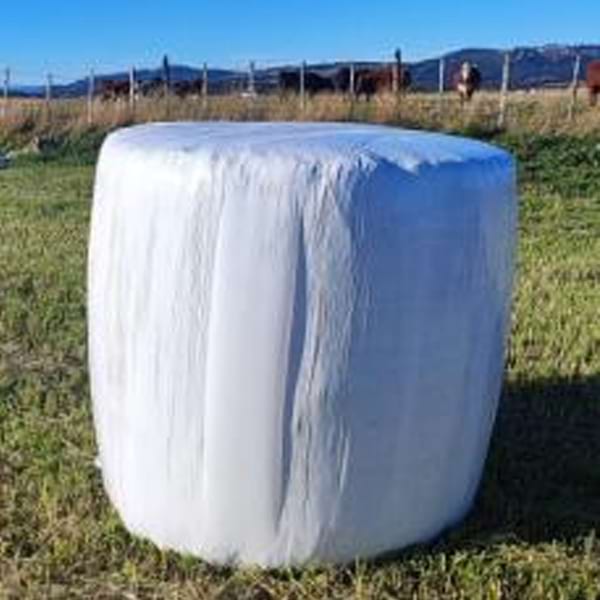


How many bales can one Bale Net Wrap roll really cover? The answer depends on more than roll length. Bale size, wrapping settings, and feeding performance all matter. This guide explains how to calculate bale output, estimate net consumption, and reduce waste before your next purchase.
How Many Bales Can One Bale Net Wrap Roll Cover?
One roll of bale net wrap can cover a different number of bales depending on its usable length and consumption per bale. A longer roll generally covers more bales when other conditions remain unchanged. However, bale size and wrapping settings can change the final result.
For example, a 2,000-meter roll may cover around 133 bales if each bale uses 15 meters. This is a theoretical estimate, not a guaranteed production figure. Actual output depends on the baler and field conditions.
Typical Bale Output from a Net Wrap Roll
There is no universal answer to how many bales per roll of net wrap. Different farms use different bale sizes and wrapping settings. Their net consumption can vary considerably.
A small round bale usually needs less net material than a larger one. The number of wraps also affects total consumption. More layers require more net from the same roll.
Roll specifications matter as well. Two rolls may look similar but have different lengths. Buyers should compare usable roll length instead of relying only on roll appearance or package size.
How Roll Length Affects the Number of Bales
Roll length is one of the main factors affecting bale net wrap coverage per roll. A longer roll provides more material for the same wrapping setup. This generally increases the number of bales produced per roll.
Consider two rolls with different usable lengths. If each bale consumes 15 meters, a 2,000-meter roll theoretically covers 133 bales. A 3,000-meter roll covers approximately 200 bales.
Usable Roll Length | Net Used per Bale | Estimated Bale Output |
|---|---|---|
2,000 m | 15 m | 133 bales |
2,500 m | 15 m | 166 bales |
3,000 m | 15 m | 200 bales |
These figures assume consistent consumption and no material losses. They help buyers compare roll capacity under the same conditions. Actual output may be lower during regular operation.
How Many Meters of Net Wrap Does One Bale Need?
Net consumption per bale depends mainly on bale circumference and wrapping coverage. A larger bale generally needs more material for each complete layer. The required net length also changes when operators increase the number of wraps.
For a simplified estimate, consider the bale circumference. Multiply it by the number of effective layers. Then allow for overlap and the feeding requirements of the baler.
The actual calculation can be more complex. Net feeding systems may apply material beyond the exact circumference. Operators should also consider the manufacturer's recommended wrapping settings.
A Simple Formula to Calculate Bales per Roll
You can estimate production using a straightforward formula:
Bales per Roll = Usable Net Length per Roll / Net Length Used per Bale
First, check the usable length stated for the roll. Next, determine the average net consumption per bale. Divide the first figure by the second to estimate the total output.
For example, assume a roll contains 2,000 meters of usable net. Each bale consumes approximately 15 meters. The calculation is:
2,000 ÷ 15 ≈ 133 bales
This means one roll can theoretically cover about 133 bales. The result assumes stable feeding and consistent wrapping. Actual production may be lower because of feeding losses and roll changes.
Note: Use actual consumption records whenever possible. They provide a more reliable estimate than theoretical calculations.
What Factors Affect Bale Net Wrap Consumption?
The number of bales per roll depends on more than roll length. Bale dimensions, wrapping settings, and machine performance all influence consumption. Understanding these factors helps operators make better estimates.
Even when two farms purchase identical rolls, their results may differ. Their balers may use different settings. Their bales may also have different diameters and densities.
Bale Diameter and Circumference
Bale diameter directly affects the amount of net required. A larger bale has a greater circumference. Therefore, each complete wrapping layer consumes more material.
For example, a bale measuring 1.2 meters in diameter has a smaller circumference than one measuring 1.5 meters. The larger bale needs more net for each rotation. This difference becomes more noticeable across multiple layers.
Bale dimensions should remain consistent during production. Large variations make consumption estimates less accurate. Operators should record average bale diameter when calculating net wrap usage per bale.
Number of Wraps Applied to Each Bale
The number of wraps is another important factor. Each additional layer increases total net consumption. It also reduces the number of bales covered by one roll.
However, using fewer wraps does not always improve efficiency. The net must provide suitable coverage for the crop and handling conditions. Insufficient coverage may cause loose material or unstable bales.
Operators should follow the baler manufacturer's recommendations. They should also consider crop type and storage requirements. The goal is consistent coverage without unnecessary material use.
Baler Settings and Net Feeding Performance
Baler settings influence how efficiently the machine uses net wrap. Incorrect tension may affect feeding and coverage. Poor alignment can also cause uneven distribution across the bale.
A reliable feeding system helps maintain consistent net application. Operators should inspect rollers, guides, and cutting mechanisms regularly. Worn or dirty components may interrupt feeding and increase waste.
Feeding problems can consume material without producing additional bales. A damaged section may need removal before production continues. These losses reduce the actual output from each roll.
Tip: Record roll changes and feeding problems during each baling session. These records help identify avoidable material losses.
How to Estimate How Many Net Wrap Rolls You Need
Farmers should estimate seasonal demand before ordering bale net wrap. This prevents unnecessary inventory and reduces the risk of shortages. The calculation only requires expected bale production and average net consumption.
Start with your production target. Then estimate the material required for each bale. Finally, divide the total requirement by the usable length of one roll.
Calculate Your Expected Bale Production
First, estimate how many bales you plan to produce. You can use previous harvest records as a starting point. Field size and expected yield also help establish a production target.
For example, assume your farm expects to produce 600 round bales during the season. This figure provides the basis for your material calculation. Adjust it if your harvesting schedule changes.
For commercial hay producers, production records are particularly useful. Keep separate figures for different fields or crop types. This helps account for differences in bale size and operating conditions.
Calculate Total Net Wrap Requirements
Once you know your expected production, calculate the total net requirement by multiplying the number of bales by the average net consumption per bale.
For example, assume your operation produces 600 bales, with each bale using approximately 15 meters of net wrap.
600 × 15 = 9,000 meters
If each roll contains 2,000 meters, the required number of rolls is:
9,000 ÷ 2,000 = 4.5 rolls
You would therefore need at least 5 rolls. This calculation assumes all stated net lengths are usable. Actual requirements may vary due to feeding losses, roll changes, and operating conditions.
Allow for Material Waste and Operating Losses
The theoretical calculation does not include every operating loss. Feeding interruptions may waste some material. Damaged sections and roll changes can also reduce usable length.
For example, your actual consumption may exceed the original 15-meter estimate. You should use previous production records to determine a suitable reserve. Avoid applying an arbitrary waste percentage without supporting data.
Seasonal planning should also consider delivery schedules. Agricultural work often follows narrow harvesting windows. Keeping suitable reserve stock helps prevent interruptions during busy periods.
Tip: Calculate demand using actual consumption from previous seasons. This is more reliable than using a general industry estimate.
Does Bale Net Wrap Quality Affect the Number of Bales per Roll?

Product quality influences the reliability of bale net wrap during operation. However, it does not automatically increase the number of bales per roll. Roll length and consumption remain the main calculation variables.
Quality affects how consistently the product performs. Reliable material can support stable feeding and reduce avoidable interruptions. Buyers should evaluate specifications alongside actual roll capacity.
Consistent Roll Length and Manufacturing Accuracy
Accurate roll length is essential for estimating bale output. A roll labeled as 2,000 meters should provide the stated usable length. Differences between stated and actual length can affect purchasing calculations.
Buyers should ask suppliers how roll length is measured. They should also confirm whether the specification represents usable material. Clear product documentation makes supplier comparisons more reliable.
Some product listings specifically highlight guaranteed stated roll length. This is a useful purchasing specification to verify. For example, the TWS product listing mentions guaranteed roll length and correct roll width.
HDPE Material and Net Strength
HDPE is commonly used in agricultural bale net wrap. It provides a lightweight material structure for agricultural applications. Its mechanical properties help the net maintain coverage during handling.
Product construction also affects performance. Buyers should review material type, mesh structure, and tensile specifications. These details help determine whether a product suits their operating conditions.
The Longxing product listing describes HDPE material and UV protection. It also identifies a double-knot construction and customizable dimensions. These specifications provide useful reference points when evaluating products.
Stronger material does not necessarily mean more bales per roll. The total usable length remains the primary factor. Material performance mainly influences reliability and application suitability.
UV Resistance and Outdoor Storage
UV resistance matters when agricultural net wrap faces sunlight. Prolonged exposure may gradually affect plastic material. UV stabilization helps improve resistance during outdoor exposure.
Buyers should check the supplier's stated UV performance. Different products may offer different protection levels. Do not assume every HDPE net has the same outdoor service life.
Storage conditions also matter before use. Keep rolls in a dry, covered location whenever possible. Avoid unnecessary exposure to direct sunlight and physical damage.
Note: UV resistance specifications describe material protection. They do not guarantee a fixed service life under every climate.
How to Choose the Right Bale Net Wrap Roll for Your Baler
Choosing the correct roll involves more than comparing prices. The product must match the baler's requirements. It should also provide suitable length and reliable feeding performance.
A compatible product helps maintain efficient operation. Incorrect dimensions may cause feeding difficulties. Buyers should confirm the specifications before placing an order.
Check Roll Length and Material Quality
Roll length determines how many bales you can wrap before replacing the roll. A longer roll may reduce changeover frequency and help maintain continuous baling operations. However, buyers should check the actual usable length rather than relying only on the product label.
Material quality also affects wrapping performance. Look for suitable tensile strength, tear resistance, and UV protection. These properties help the net maintain reliable coverage during baling and handling.
When comparing suppliers, check the available roll lengths, widths, and material specifications. You can explore our Bale Net Wrap to learn more about product specifications and available options. Choose a roll that matches your baler and expected production volume.
Check Roll Width and Baler Compatibility
Roll width must match the baler's net feeding system. A roll that is too narrow may not provide complete bale coverage. An unsuitable width may also cause feeding problems.
Check the baler manual before selecting a product. Confirm the required width and core dimensions. Ask the supplier to verify compatibility with your machine model.
Different balers may have different requirements. Do not assume that one roll fits every machine. Compatibility should always be confirmed before bulk purchasing.
Compare Roll Length and Net Consumption
Roll length helps determine the expected bale output. However, longer rolls are not automatically the most economical option. Buyers should compare usable length and actual consumption.
For example, one product may offer a longer roll. Another may provide more consistent feeding. Both factors can influence operating costs.
A useful comparison should include:
Usable net length per roll
Average net consumption per bale
Roll width and compatibility
Material specifications
Expected feeding performance
This approach provides a clearer picture of purchasing value. It also helps avoid decisions based only on the initial price.
Check Product Specifications Before Purchasing
Product specifications should clearly identify the material and dimensions. Buyers should also check mesh construction and UV protection. These details help determine whether the product suits their application.
Request a technical specification sheet when necessary. Confirm roll length, width, and packaging details. Ask about available samples before placing a large order.
The product listing should match the actual goods supplied. Clear specifications reduce misunderstandings between buyers and manufacturers. They also support more accurate inventory planning.
Tip: Ask suppliers to confirm usable roll length and compatible baler models in writing before ordering.
How to Reduce Bale Net Wrap Waste During Baling
Reducing net waste helps farmers improve material efficiency. It also makes seasonal purchasing more predictable. Small improvements in machine operation can produce meaningful savings over time.
The best approach combines correct settings and regular maintenance. Operators should also monitor actual consumption. This helps identify problems before they affect an entire production run.
Set the Correct Number of Wraps
The number of wraps should match bale size and coverage requirements. Too many layers increase material consumption. Too few may leave the bale inadequately covered.
Start with the baler manufacturer's recommended settings. Then check the coverage of finished bales. Adjust the settings only when necessary.
Keep the settings consistent across similar bales. This makes net consumption easier to calculate. It also improves production planning.
Maintain Proper Net Feeding and Tension
Correct net feeding helps reduce unnecessary material loss. Check the feeding path before starting each operation. Make sure the net enters the baler smoothly.
Net tension should remain consistent during wrapping. Excessive tension may affect feeding performance. Insufficient tension may cause uneven coverage.
Inspect rollers and cutting mechanisms regularly. Remove accumulated debris from the feeding area. Replace damaged components when necessary.
Track Actual Net Consumption per Bale
Production records provide the best basis for future estimates. Record the roll length and total bales produced. Also note the number of damaged sections and feeding interruptions.
Compare actual output against theoretical calculations. If the difference becomes significant, investigate the cause. Check machine settings, bale dimensions, and roll specifications.
A simple tracking table can help:
Production Record | Example |
|---|---|
Usable roll length | 2,000 m |
Total bales produced | 125 |
Estimated consumption per bale | 16 m |
Theoretical output at 15 m | 133 bales |
Output difference | 8 bales |
These figures are illustrative. They show how actual production records reveal consumption differences. Use them to improve future purchasing decisions.
Proper storage helps protect unused agricultural wrapping materials from environmental damage. Keep net wrap rolls in a clean, dry place away from direct sunlight, excessive heat, and moisture. These precautions can help reduce material damage before the next baling operation.
Silage film also requires suitable storage conditions before use. For more practical storage tips, read our guide on How to Store Silage Wrap Film Before Use.
Tip: Track consumption across several rolls. A larger sample provides a more reliable average for seasonal planning.
Conclusion
Calculating bales per Bale Net Wrap roll helps control costs and reduce waste. Roll length, bale size, and wrapping settings determine actual output. SHUORUI provides agricultural Bale Net Wrap designed for reliable coverage and efficient baling operations.
FAQ
Q: How many bales can one Bale Net Wrap roll cover?
A: It depends on roll length, bale size, and the number of wraps. Divide usable roll length by net consumption per bale.
Q: How do you calculate bales per roll of Bale Net Wrap?
A: Divide the roll length by the net length used per bale.
Q: What affects Bale Net Wrap consumption?
A: Bale diameter, wrap layers, feeding settings, and net tension affect usage.
Q: Does longer net wrap roll length mean lower costs?
A: It may reduce roll changes and labor, depending on the price and actual bale output.