

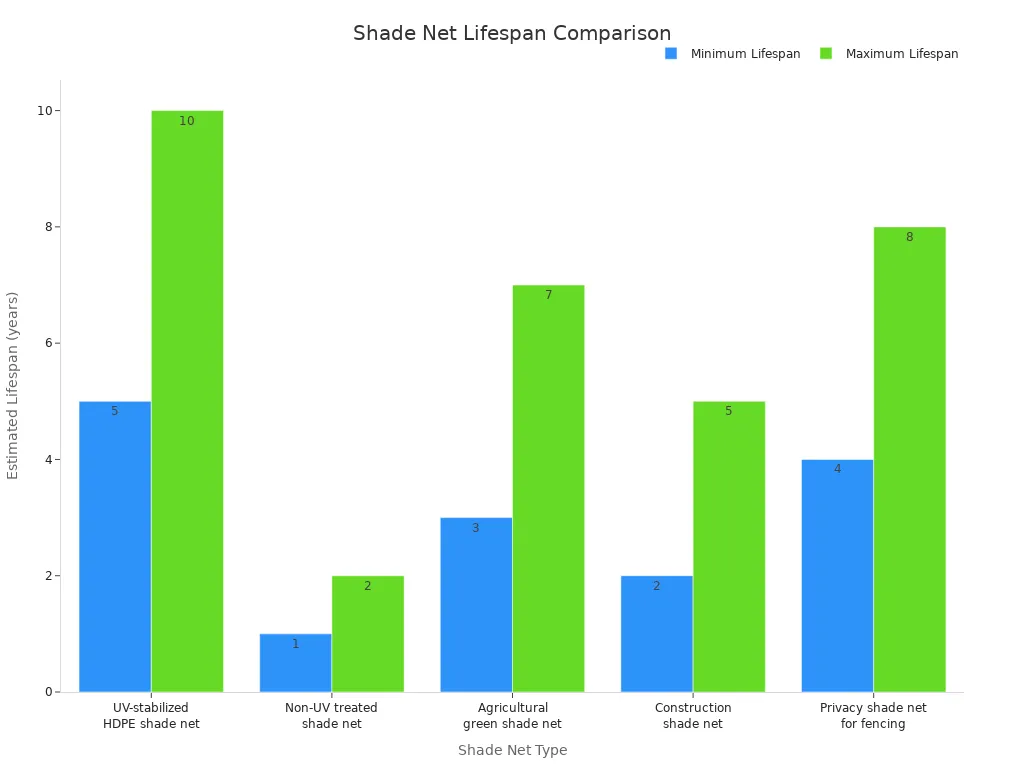
You can expect a shade net to last 3 to 10 years. How long it lasts depends on the material and UV resistance. The color and how you put it up also matter. How you use it can change how long it lasts. Shade Cloth blocks bad sun rays. It helps keep things cooler. Look at this chart to see how each type lasts:
| Shade Net Type | Estimated Lifespan |
|---|---|
| UV-stabilized HDPE shade net | 5–10 years |
| Non-UV treated shade net | 1–2 years |
| Agricultural green shade net | 3–7 years |
| Construction shade net | 2–5 years |
| Privacy shade net for fencing | 4–8 years |
Key Takeaways
Shade nets usually last from 3 to 10 years. The time depends on how good the material is and how well it resists UV rays. - Pick high-density polyethylene (HDPE) shade nets with UV protection. These last longer and block the sun better. - Clean your shade net often and check for any damage. Doing this can help your shade net last much longer.
Shade Cloth Lifespan Factors
Material and UV Stabilization
When you pick a shade net, the material makes a big difference. Some nets use high-density polyethylene (HDPE), which is strong and lasts longer. Others use low-grade plastics that break down faster. UV stabilization also matters. If your net has good UV protection, it will not fade or crack as quickly. You want a net that resists rot and mildew, especially if you live in a humid area. Take a look at this table to see how material and UV stabilization affect durability:
| Material Type | Durability | UV Stabilization Effect |
|---|---|---|
| HDPE | Strong and durable | Enhances longevity and prevents fading |
| Low-grade plastics | Break down faster | Poor UV resistance leads to quicker damage |
Shade Cloth made from HDPE with UV protection will last much longer than nets made from cheaper materials. If you choose a net without UV stabilization, you may need to replace it every year or two.
Climate and Sun Exposure
Your local climate plays a big role in how long your shade net lasts. If you live somewhere with strong sun, your net will face more UV rays. This can wear it out faster. Rain, wind, and humidity also affect the net. In hot and dry places, nets can become brittle. In wet climates, you might see mold or mildew. You should think about how much sun and weather your net will face before you buy one.
Tip: If your area gets lots of sun, look for Shade Cloth with extra UV protection. This helps your net last longer and keeps your space cooler.
Color and Light Filtration
The color of your shade net does more than just change how it looks. It affects how much sunlight gets blocked and how long the net lasts. Here are some things to know:
Black shade net offers the highest level of shade and blocks sunlight very well.
Green and white shade nets diffuse light and help reduce heat.
Black shade netting works best for farms because it protects crops from too much sun and gives strong UV protection.
If you want to keep things cool and protect plants, black Shade Cloth is a smart choice. Green and white nets work well if you want softer light and less heat.
Installation and Usage
How you install your shade net can make it last longer. If you use sturdy poles, frames, or wires, your net can handle wind and bad weather. You should avoid horizontal installations because they collect rainwater and debris, which can damage the net. Try these steps to get the most out of your net:
Design your installation to prevent pooling water.
Avoid flat setups that collect leaves and dirt.
Use clips, hooks, or ropes made for shade nets.
Keep the net tight so stress spreads evenly.
Stay away from sharp edges that can cut the net.
Anchor your net to strong supports so it does not blow away.
If you use poor quality nets or install them carelessly, they wear out faster. Cheap materials do not block the sun well and can break down from UV rays. Some low-quality nets have chemicals that make them fall apart even quicker. You want to choose a good Shade Cloth and set it up right to get the most years out of it.
Extend Shade Net Life
Cleaning and Maintenance
You want your shade net to last as long as possible. Regular cleaning helps keep it strong. Try these steps:
Use a soft-bristled brush to remove loose dirt and leaves.
Mix mild detergent with lukewarm water for gentle cleaning.
Scrub the surface with a soft sponge or cloth.
Rinse with clear water and let the net air dry.
Check for stains, tears, or fading every month.
Inspect metal parts for rust and make sure anchors are secure.
Here’s a quick guide for safe cleaning agents:
| Cleaning Agent | Description |
|---|---|
| Mild Detergent | Gentle soap solution for most fabrics. |
| Vinegar Solution | Natural choice for mildew and mold. |
| Metal Cleaner | Removes rust from metal parts. |
Proper Installation
You can make your Shade Cloth last longer with smart installation. Follow these tips:
Clear the ground of sharp objects before you start.
Avoid windy days when installing.
Unroll the net carefully and don’t drag it.
Attach the net loosely at the center, then work toward the edges.
Keep the net taut and smooth to prevent sagging.
Anchor the net well to avoid gaps and wind damage.
Seasonal Storage
When you don’t need your shade net, store it the right way:
Fold the net only when it’s dry.
Keep it in a cool, shaded spot.
Do small repairs before storing to prevent bigger problems later.
Avoiding Damage
You can prevent accidental damage with a few simple habits:
Inspect for tears and holes often.
Repair small damages quickly.
Use clips or bungee cords to stop sagging.
Anchor with ground stakes or weighted bases for windy days.
Adjust shading for each season.
Tip: Good management and regular checks help your shade net last longer than just picking the best material.
When to Replace a Shade Net
Visible Damage
You should check your shade net often for signs of wear. If you see holes, tears, or fraying, it is time to think about a replacement. Even small rips can let in too much sunlight and lower the net’s protection. When you spot large tears or thinning fabric, repairs may not help. Using a damaged net means you lose UV protection, which is the main job of Shade Cloth. If you notice rust or corrosion on metal parts, this can also weaken the net’s structure.
Here is a quick guide to help you spot when your net needs replacing:
| Indicator | Description |
|---|---|
| Visible Wear and Tear | Look for fraying, fading, or thinning of the fabric, as well as rust or corrosion on metal parts. |
| Structural Instability | A wobbling or less sturdy structure may indicate weakened or damaged components. |
| Frequent Repairs | Consistent issues with specific parts suggest they may no longer be fit for purpose. |
| Outdated Materials | Newer materials may offer better durability and protection; consider upgrading if the structure is old. |
| Safety Concerns | Any part posing a risk of injury should be replaced immediately to ensure user safety. |
Reduced Effectiveness
Sometimes your shade net looks fine, but it does not work as well as before. You might notice your plants are not growing as well, or the area under the net feels hotter. This can happen when the net loses its ability to block sunlight or filter heat. Studies show that different colors and types of nets affect plant growth. If your net no longer gives the right shade, your plants may suffer. When you see these changes, it is a sign to get a new net.
Safety Concerns
Safety always comes first. If your net feels loose, wobbly, or unstable, it can become a hazard. Degraded materials or loose fittings can cause the net to fall or break. This puts you, your family, or your crops at risk. If you spot any part that could cause injury, replace the net right away. Keeping your shade net safe protects everyone who uses the space.
You can expect most shade nets to last between 3 and 10 years. The table below shows what affects durability:
| Factor | Description |
|---|---|
| Material Quality | Stronger nets last longer |
| Mesh Size | Smaller holes mean better protection |
| Weather Resistance | Handles sun, rain, and wind |
| Tear Resistance | Less likely to rip |
Want your net to last? Try these tips:
Store it in a cool, dry spot.
Clean off dirt and check for holes.
Patch small tears quickly.
Choosing a high-quality net saves money and helps your plants grow better. Take care of your Shade Cloth and you’ll get the best results.
FAQ
How do you know when your shade net needs replacing?
If you see big holes, fading, or loose edges, it’s time for a new net. Damaged nets don’t block sunlight well.
Can you repair small tears in a shade net?
You can fix small tears with shade net repair tape or patch kits. Make sure the area is clean before you start.
What’s the best way to store your shade net during winter?
Clean the net first.
Fold it when dry.
Store it in a cool, dry place away from sunlight.


