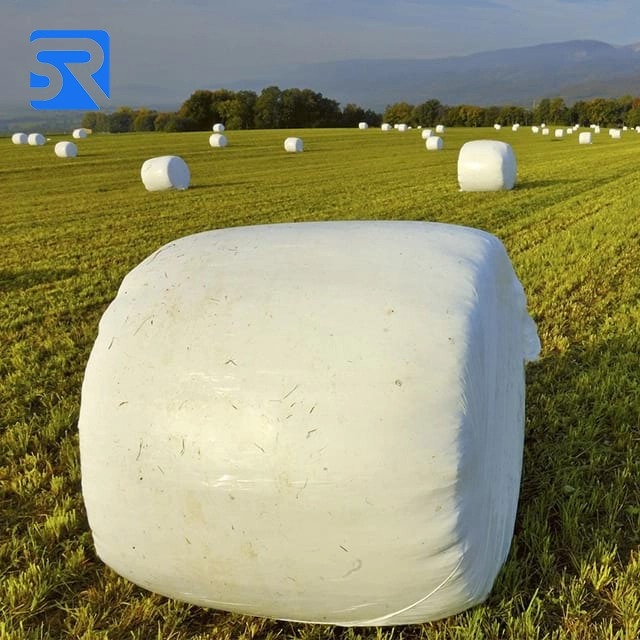


Producing high-quality forage relies heavily on successful lactic acid fermentation. To achieve this, you need a perfectly sealed, oxygen-free environment. Traditionally, farmers relied on thick plastic films. They assumed heavier gauges automatically meant better protection against the elements. However, modern agricultural procurement requires us to move beyond this outdated mindset.
Today, evaluating advanced multi-layer technologies, optimal stretch ratios, and operational efficiency matters much more than raw plastic thickness. Balancing superior puncture resistance and strong oxygen barriers with maximum bales wrapped per roll is the real goal.
Read on to discover how modern Silage Bale Wrap thicknesses influence machinery performance, daily output, and long-term storage success. You will learn how to evaluate films based on layer architecture, UV stabilization, and actual field yield.
Key Takeaways
The industry standard for silage bale wrap thickness is 25 microns (µm), but high-performance multi-layer films (19–23 µm) offer equal protection with increased roll length.
Effective barrier protection relies on a minimum 6-layer application with a 50% overlap, regardless of the baseline film thickness.
Thinner, high-performance films reduce machine downtime by offering up to 2000m per roll compared to standard 1500m rolls.
Film manufacturing methods (Blown vs. Cast) and UV stabilization ratings (e.g., 180kly) are more accurate indicators of field performance than raw thickness alone.
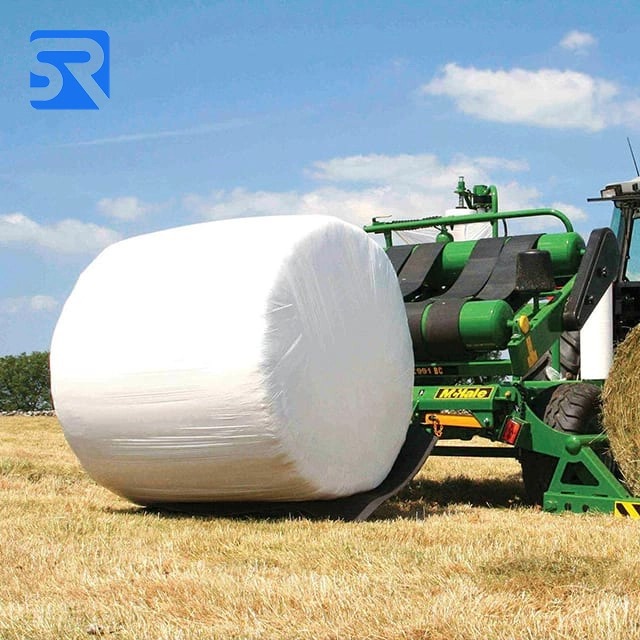
1. Standard vs. High-Performance Thickness: Decoding the Specs
The 25 µm Baseline
For decades, the agricultural industry accepted 25 microns (µm) as the universal standard for baling films. Manufacturers established this thickness because older extrusion technologies could not guarantee consistent oxygen barriers at lower gauges. A 25 µm plastic provided enough bulk to resist tough crop stems. It also survived rough handling during transport. Farm operators trusted this baseline. It offered a comfortable margin of error against variable weather conditions and minor machinery miscalibrations.
The 19–23 µm High-Performance Tier
Recent advancements in plastics engineering have disrupted the 25 µm norm. Manufacturers now produce modern co-extruded films using 3 to 7 distinct layers. This multi-layer architecture allows factories to sandwich different polymer blends together. As a result, a 21 µm film can maintain identical puncture resistance and tear limits to a traditional 25 µm product. You get the same physical durability despite the lower overall micron count. The multi-layer design creates a tortuous path for oxygen molecules, ensuring excellent airtightness.
Evaluation Lens
When you begin shortlisting vendors for your next season, you must adjust your evaluation criteria. Pure thickness is no longer the ultimate proxy for quality.
Prioritize Resin Quality: Look for films made from 100% virgin Linear Low-Density Polyethylene (LLDPE). Recycled or low-grade resins compromise stretchability.
Examine Layer Structure: Ask suppliers if they use a 5-layer or 7-layer co-extrusion process. More layers generally mean better mechanical distribution of stress.
Request Technical Data Sheets: Verify the oxygen transmission rate (OTR) and dart drop impact strength. These metrics tell you how the film actually performs under tension.
2. How Thickness Intersects with the "6-Layer Rule"
The Non-Negotiable Layer Baseline
A dangerous misconception persists in forage management. Some operators believe buying a thicker film allows them to reduce the total number of wrapping layers. This is entirely false. Effective oxygen barriers rely on overlapping layers, not a single thick sheet. The absolute minimum requirement remains 6 layers. Operators achieve this through a 2+2+2 configuration alongside a strict 50% overlap. When you apply Silage Bale Wrap correctly, the 50% overlap ensures every part of the bale receives adequate coverage, sealing out oxygen completely.
Adjusting for Dry Matter (DM) Content
Crop moisture directly influences your wrapping strategy. High-DM forage (over 50%) features stiff, coarse stems. These mature crops act like needles pressing against the inner plastic boundary. Furthermore, if you plan on long-term storage exceeding 12 months, the baseline 6 layers will not suffice. You must scale up to 8 or even 10 layers. When applying 10 layers, choosing a highly stretchable 19–23 µm film becomes financially crucial. If you use a thick 25 µm standard film for a 10-layer wrap, your cost per bale will skyrocket unnecessarily.
The Stretch Factor Limit
Balers and standalone wrappers function optimally when they stretch the film exactly 70%. High-performance thinner films handle this stretch beautifully, provided you maintain equipment calibration. However, you must avoid over-stretching. Pushing a 21 µm film past its intended ratio causes a phenomenon known as "neck-down." The film narrows significantly as it leaves the dispensing rollers. This narrowing ruins your 50% overlap margin. Consequently, thin gaps form, oxygen enters the bale, and harmful aerobic bacteria ruin your valuable feed.
3. Manufacturing Quality: Why Pure Thickness Can Be Misleading
Blown vs. Cast Production
The manufacturing process dictates how film behaves in the field. Factories generally use either blown or cast extrusion. Blown films undergo multi-directional stretching during production. This creates exceptional strength across the entire surface. When evaluating technical specifications, look at the variance between the Transverse Direction (TD) and Machine Direction (MD). High-quality blown films show a variance of less than 10MPa. Because of this structural balance, a well-extruded 21 µm blown film easily outperforms a thicker 25 µm cast film, especially when resisting blunt force trauma from stalks.
UV Resistance Standardization
Plastic degrades rapidly under direct sunlight. Thickness alone cannot substitute for chemical UV protection. Manufacturers must blend specific carbon or chemical UV stabilizers into the resin masterbatch. When buying film, you must demand regionalized UV guarantees. For high-sunlight environments like the US Sunbelt, Australia, or parts of Southern Europe, you need an agricultural film rated for at least 180kly (kilo-langleys). A thick film without adequate UV stabilizers will become brittle and shatter long before a thin, properly stabilized alternative.
Adhesive Consistency
Wrapping films rely on tackifiers—often Polyisobutylene (PIB)—to stick together and form an airtight seal. Thicker films can sometimes mask sloppy manufacturing. They hide uneven glue distribution because the heavy plastic lays flat under its own tension. Premium thin films require absolute precision during extrusion. The tackifier must coat the layers uniformly. If glue pools or activates too aggressively during high summer temperatures, it can "strangulate" the bale. This means the layers fuse too tightly, warping the bale shape and potentially tearing the outer barrier upon cooling.
4. Implementation Risks and Machinery Alignment
Equipment Calibration Needs
You cannot simply drop a modern 19–23 µm film into an old, unmaintained wrapper and expect perfect results. Thinner plastics require well-calibrated machinery. Before the season starts, meticulously clean your pre-stretch rollers. Remove all sticky dirt, old tackifier residue, and dust. A dirty roller will grip a thin film inconsistently, causing micro-tears before the plastic even touches the forage. Furthermore, ensure your gears provide exactly a 70% stretch ratio to prevent over-tensioning.
Storage and Handling Realities
Physical handling requires updated protocols. The edges of thinner film rolls are physically more vulnerable to drop damage. If a worker drops a roll on a concrete floor, the impact can fuse the edges together. This creates a weak point that snaps repeatedly during operation. We highly recommend vertical storage. Always place rolls on their flat edge. In this orientation, the rigid plastic core and the densely wound layers provide structural integrity, protecting the delicate edges from crushing.
Shortlisting Next Steps
Implementing a new procurement strategy requires a structured approach. Follow this checklist to ensure you acquire the best product for your specific operational needs:
Request Quality Certifications: Ask suppliers for their ISO 9001 and SGS testing certificates to verify their manufacturing consistency.
Confirm Warranty Limitations: Secure written confirmation of a 12-month UV warranty tailored to your local solar radiation levels (e.g., 180kly).
Run a Controlled Pilot Test: Do not commit your entire annual budget immediately. Order a single pallet of 19–23 µm film. Test it on your existing wrapping machinery to verify calibration compatibility before placing bulk orders.
Conclusion
Navigating agricultural plastics procurement means moving past old assumptions. While the traditional 25 µm specification remains a reliable fallback for older machinery and highly abrasive crops, it is no longer the ultimate standard. Modern 19–23 µm high-performance co-extruded films represent a highly scalable, cost-efficient choice. They deliver identical oxygen barriers, save significant machinery downtime, and reduce total plastic waste.
Your next step is simple but critical. Audit your baler’s pre-stretch capabilities to ensure it can handle advanced films without causing neck-down. Then, calculate your current cost-per-bale rather than focusing on roll prices. Once you have those figures, contact a reputable supplier to request technical specification sheets and sample rolls. Testing a modern multi-layer Silage Bale Wrap on your own farm will rapidly demonstrate its operational superiority.
FAQ
Q: Can I use fewer wrapping layers if I buy a thicker silage bale wrap?
A: No. Oxygen barriers are achieved through the 50% overlap of multiple layers, not the raw thickness of a single sheet. Six layers remain the absolute minimum to ensure proper lactic acid fermentation.
Q: How do I know if my baler is over-stretching high-performance thin films?
A: Measure the film directly on the bale. If the width has narrowed significantly—a phenomenon called neck-down—or if highly visible white stretch marks appear, your pre-stretch ratio exceeds the optimal 70% threshold. You must recalibrate the machine.
Q: Are thinner silage films harder to recycle?
A: No. Because they use less plastic per bale and are typically made from 100% Polyethylene (PE), thinner high-performance films are highly compatible with agricultural circular economy recycling programs. They actually reduce your overall disposal burden.