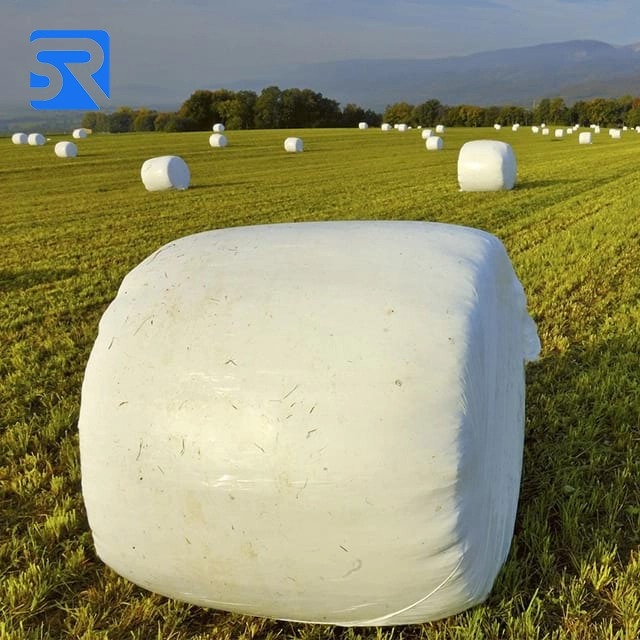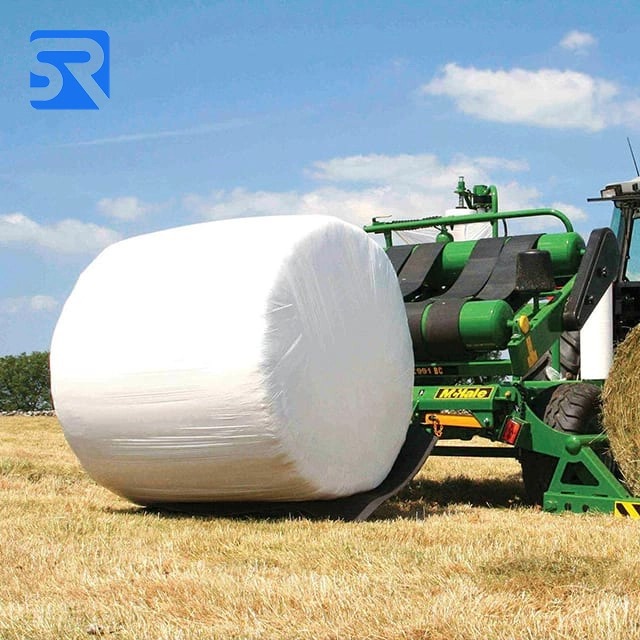


Storing forage outdoors exposes farm operations to severe weather and rapid oxygen degradation. You work hard during harvest season. However, leaving crops exposed can quickly destroy your final yield. Without proper sealing, operations risk substantial dry matter loss (DML) before the feed ever reaches the bunk. Standard twine or net wrap alone leaves crops highly vulnerable to the elements. High-quality Silage Bale Wrap requires an upfront investment, but it protects your margins. Sub-standard wraps or improper application cause major issues. They result in wind-blown "tails," punctured bales, and rampant spoilage. Choosing the right silage film isn't about finding the cheapest roll on the market. It is an evaluation of the manufacturing process, mil thickness, tackiness, and cost-per-bale efficiency. Read on to learn exactly how you can evaluate and select the best protective film for your agricultural operation.
Key Takeaways
Outdoor storage without proper plastic wrapping can lead to 20–45% dry matter loss.
Advanced 5- and 7-layer blown films offer superior stretch (up to 350–400%) compared to legacy 3-layer or cast films.
Thicker film does not automatically mean better value; standard 1 mil/1500m rolls yield 26–33% more bales than cheaper 1.2 mil/1200m rolls.
Wrap color does not dictate fermentation quality, but it does dictate heat reflection and UV management based on your local climate.
Standard operational procedure (SOP) dictates a strict 50% film overlap and 4 to 6 layers depending on crop coarseness.

The True Cost of Poor Silage Protection
Farmers often underestimate the financial impact of weather exposure. We must look at the actual math behind dry matter loss. Contrast standard twine or net wrap against premium silage film. Basic net wrap provides structural integrity but zero atmospheric protection. This lack of protection leads to 20–45% DML. Weathering, plant respiration, and microbial activity consume the valuable nutrients inside the bale. Premium silage film changes this outcome entirely. A quality wrap can reduce first-year losses to just 5–8%.
You must also consider the "flapping tail" risk. Low-tack films fail frequently in windy regions. Poor adhesion prevents the film layers from sticking together securely. Wind catches these loose ends, peeling the plastic back. This allows rapid oxygen ingress, ruining the anaerobic environment. Furthermore, it leaves plastic waste scattered across the farm. Clean-up becomes a massive drain on labor hours.
A successful wrap strategy must achieve specific benchmarks. First, it must create an absolute anaerobic seal. This allows the forage to "pickle" properly. Second, the plastic must withstand aggressive machinery handling during transport. Finally, it must survive prolonged environmental exposure. Top-tier films provide up to 13+ months of reliable UV resistance. If your current film falls short here, you are losing money.
Evaluating Silage Bale Wrap Specifications
Manufacturing Process: Blown vs. Cast Film
The agricultural plastic industry has evolved significantly over the past decade. A massive technological gap exists between modern and legacy films. Today, 5-layer and 7-layer co-extruded blown films dominate the market. They easily outperform older 3-layer cast film technologies.
Blown films provide crucial stretch redundancy. They offer a maximum longitudinal stretch of 350–400%. Your wrapping machinery typically demands a 130–150% stretch during operation. Blown films absorb this mechanical stress effortlessly without tearing. Cast films stretch primarily in one direction, making them prone to splits. We strongly recommend upgrading to blown co-extruded products for maximum reliability.
Thickness vs. Length Advancements
For years, the industry standard thickness stood firm at 25µm (1 mil). Many farmers still look for this exact specification. However, emerging sustainable solutions offer better efficiency. Advanced co-extrusion technology now allows for high-performance 22µm films.
These thinner films maintain identical oxygen barriers compared to older 25µm wraps. They reduce total plastic use by 10%. More importantly, the thinner profile allows manufacturers to extend roll length to 1800m. Longer rolls reduce machine downtime. You spend less time changing rolls and more time wrapping bales.
Tack and Puncture Resistance
Tack is a critical specification. We define "tack" as the specialized glue layers applied during extrusion. These layers serve as the primary mechanism for airtight sealing. High tack ensures layers weld together seamlessly upon contact. Low tack invites oxygen and moisture.
Puncture resistance represents another non-negotiable requirement. You often deal with coarse-stem crops. Corn silage and stiff alfalfa stems easily pierce cheap plastic. Advanced multi-layer films provide a dense puncture-resistant barrier. They stop stiff stalks from compromising the seal during the wrapping cycle.
Film Color Myths and Climate-Based Selection
You have likely heard conflicting advice regarding film colors. Let's debunk the ultimate fermentation myth right now. Film color does not meaningfully alter internal CO2/O2 concentrations. It does not change fermentation speed. The quality, thickness, and oxygen barrier of the plastic dictate preservation. However, color heavily influences external temperature management.
You should match film color to your regional climate. Here is a simple climate mapping chart for quick reference.
Film Color | Ideal Climate | Primary Benefit |
|---|---|---|
White | Hot, continental climates (direct intense sunlight) | High reflectivity prevents overheating and reduces plastic permeability. |
Black / Green | Cold, northern climates | Absorbs heat to maintain baseline temperatures; acts as a visual bird deterrent. |
Transparent | DO NOT USE | Lacks UV inhibitors. Leads to rapid degradation and spoilage. |
Use white film in hot, continental climates with intense direct sunlight. High reflectivity prevents the bale from overheating. Overheating increases plastic permeability, allowing oxygen ingress. Keeping the bale cool preserves the anaerobic seal.
Conversely, use black or green film in colder, northern climates. Black absorbs heat effectively. This helps maintain baseline temperatures needed for proper lactic acid bacteria growth. Dark colors also serve as excellent visual deterrents against bird attacks, minimizing peck holes.
There is one hard rule you must never break. Never use transparent film for silage. Transparent wrap completely lacks the necessary UV inhibitors. It will rapidly degrade under sunlight, ruining your entire crop in just weeks.
Application Best Practices for Silage Bale Wrap
Even the best plastic fails if you apply it incorrectly. You must reinforce the 50% overlap rule across your operation. You need to calibrate the wrapping machine accurately. Ensure every rotation overlaps the previous layer by at least 50%. This overlap creates the necessary air barrier.
Your layering strategy must adapt based on crop type. A one-size-fits-all approach causes spoilage. Follow these specific layering guidelines:
Fine Grasses: Apply a minimum of 3 to 4 layers. Soft grasses pose little puncture risk, so standard coverage suffices.
Coarse-Stemmed Material / Straw: Apply a minimum of 4 to 6 layers. Stiff materials easily poke through thin barriers. The extra layers prevent stalk punctures.
Frequent Transport: Add an extra 2 layers (totaling 6+) if bales will be aggressively handled. Moving bales off-site requires maximum structural integrity.
Pay close attention to tension control. Frame tension acts as a double-edged sword during application. Too loose allows oxygen pockets to form between the plastic and the forage. These pockets breed mold instantly. Too tight over-stretches the film beyond its capacity. This causes microscopic tears and premature UV failure. Aim for the manufacturer's recommended 130–150% stretch threshold.
Common Mistake: Wrapping bales during heavy rain. Moisture trapped between the plastic layers destroys the tack glue. Always wrap in dry conditions to ensure a proper seal.
Conclusion
Selecting the right agricultural protective film requires looking past simple roll prices. You must evaluate the extrusion layer technology, maximum stretch thresholds, and overall roll yield. Cheaper rolls often cost you significantly more in labor, machinery downtime, and spoiled feed.
We urge buyers to audit their current bale wrap inventory. Check the exact mil thickness, the total length, and the manufacturing type. Determine whether you are using outdated cast film or modern blown film.
Your next-step action is straightforward. Recommend engaging directly with your suppliers. Demand transparent data regarding their UV resistance ratings. Aim for a rating of 13+ months to guarantee safe overwintering. Ask them to verify their co-extrusion layer count. Making informed decisions here will dramatically improve your harvest retention and bottom-line profitability.
FAQ
Q: What is the industry standard thickness for silage bale wrap?
A: The current industry standard is 25µm (1 mil). However, high-performance 22µm films are becoming highly viable. These thinner films utilize advanced multi-layer co-extrusion to provide identical oxygen barriers while reducing overall plastic waste.
Q: How long does silage wrap protect against UV rays?
A: Premium films are typically rated for 12 to 18 months of UV protection. Degradation accelerates rapidly after the rated period. Always check the manufacturer specifications to ensure the wrap matches your intended storage duration.
Q: Can I use stretch film intended for pallets on silage?
A: No. Industrial pallet wrap completely lacks UV inhibitors. It also lacks the specific agricultural tack glue required to create an airtight seal for anaerobic fermentation. Using pallet wrap will result in massive crop spoilage.