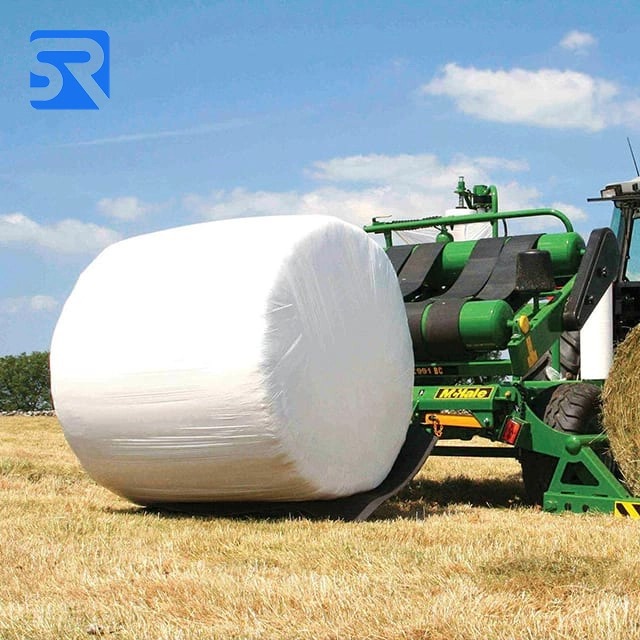


Stop viewing forage packaging as a simple consumable cost. Instead, treat it as a critical yield-protection strategy. Choosing the wrong binding material can trigger severe dry matter loss. It causes machinery bottlenecks and creates immense frustration during winter feeding. Today, many agricultural operations are actively transitioning away from traditional twine. They are adopting high-tension net wrap. Increasingly, progressive farms use Net Replacement Film (NRF) layered under an outer Silage Bale Wrap to maximize feed retention.
The ultimate choice between film and net depends on several distinct factors. You must evaluate crop moisture levels, baler compatibility, and downstream recycling protocols. You also need to calculate the true Total Cost of Ownership (TCO). Let us break down how each material performs in the field. This guide will help you optimize your harvest, protect your forage quality, and streamline your entire winter feeding workflow.
Key Takeaways
Material Purpose: Net wrap (HDPE) focuses on tension, shaping, and breathability for dry hay; Silage bale wrap/NRF (LLDPE) creates an oxygen-blocking barrier for high-moisture fermentation.
Efficiency Gains: Both options drastically reduce baling time compared to twine (requiring only 2-3 rotations per bale), increasing field output by up to 32%.
Handling & Recycling: NRF combined with outer silage wrap allows for "zero-separation recycling" (both are film), eliminating the labor of detaching net from outer plastic during winter feeding.
TCO Logic: Upfront consumable costs are higher for film, but this is often offset by eliminating the 20–45% dry matter weathering loss associated with improper outdoor storage.
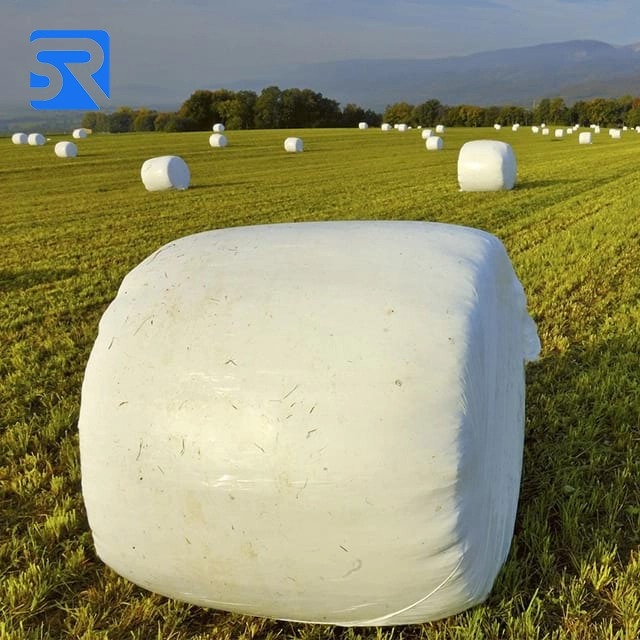
Understanding the Baseline: Silage Bale Wrap vs. Net Wrap
Net Wrap (The Standard Binder)
Manufacturers produce standard net wrap from High-Density Polyethylene (HDPE). This material provides immense structural integrity. It focuses on high tensile strength, creating a tight corset around the forage. Modern options offer edge-to-edge bale coverage, which protects the fragile shoulders of the bale. Because it covers the entire surface smoothly, it excels at shedding surface water during light rain.
This material represents the ideal choice for dry hay, straw, and short-term storage applications. The porous structure allows the bale to breathe. Breathability prevents internal moisture buildup, which directly stops internal molding and spontaneous heating in dry crops.
Silage Bale Wrap & Net Replacement Film (The Oxygen Barrier)
Unlike porous nets, agricultural films utilize Linear Low-Density Polyethylene (LLDPE). This specific plastic blend incorporates built-in UV stabilizers to withstand brutal sun exposure. The material stretches aggressively and clings to itself.
Operators must distinguish between two distinct layers. Outer stretch wrap provides total weatherproofing and creates the final airtight seal. Net Replacement Film (NRF) operates inside the baling chamber. It binds the bale initially before it ever reaches the outer wrapping mechanism. Using an integrated Silage Bale Wrap system is absolutely essential for high-moisture forage, baleage, and strict anaerobic fermentation.
Preservation Quality & Dry Matter Loss
The Mechanics of Weathering
Outdoor exposure degrades forage through a physical process called weathering. Many people mistakenly believe this is just superficial rot. In reality, it involves physical nutrient leaching. Rain washes soluble carbohydrates and proteins directly out of the plant tissue. Industry benchmarks and agricultural extensions show alarming numbers. Outdoor dry hay can suffer significant dry matter loss, ranging up to 20-45%, if it lacks proper shedding barriers. You are literally watching your profits wash into the soil.
Net Wrap's Protection Profile
High-quality net creates a remarkably tight, smooth surface. This structural integrity reduces physical handling losses by up to 65% compared to old-fashioned twine binding. Every time you move a twine-bound bale, loose material falls off. Net stops this shedding. It also provides basic water-shedding capabilities. While it cannot stop heavy, sustained rain, it forces light precipitation to roll off the curved edges rather than soaking into the core.
The Silage Wrap Advantage for Fermentation
Net alone completely fails for high-moisture crops. Wet crops require a sealed, anaerobic environment. Without it, aerobic bacteria consume the nutrients and cause rapid spoilage. Film prevents oxygen ingress. It traps internal moisture and condensation appropriately. This sealed environment ensures the rapid lactic acid fermentation required to produce premium, highly digestible silage.
Operational Efficiency: Baling Speed & Equipment Realities
Time Leverage in the Field
Field efficiency dictates harvest success. Weather windows close rapidly. You must compare the application speed of these materials. Net and NRF require only 2 to 3 total revolutions to secure a bale. Traditional twine often requires 15 to 20 revolutions. This dramatic reduction in spin time translates directly to lower tractor fuel consumption. Operators optimize their labor hours, effectively increasing total field output by up to 32% per day.
The Anti-Puncture Synergy
Field realities often challenge pristine theories. Coarse stems, such as alfalfa or stalky grasses, act like needles. They can easily puncture expensive outer stretch film. Micro-tears introduce oxygen, destroying the fermentation process in that localized spot.
Applying a tight layer of net or NRF first creates an anti-puncture synergy. The inner layer flattens and compresses the sharp stems. It creates a smooth cylindrical base. This compressed foundation actively protects the final outer stretch layers from hidden micro-tears during the wrapping process.
Equipment Compatibility Bottlenecks
You must acknowledge implementation risks before upgrading your workflow. Compatibility remains a major hurdle. Net wrap fits almost all modern round balers without issue. However, transitioning to Net Replacement Film requires specific baler models. You often need specialized dual-film systems or expensive aftermarket retrofitting to run NRF inside the chamber.
Equipment Compatibility Table
Binding Material | Baler Compatibility | Retrofit Requirements | Initial Hardware Cost |
|---|---|---|---|
Twine | Universal (Legacy & Modern) | None | Low |
Net Wrap | Most Modern Round Balers | Minimal (Tensioner adjustments) | Moderate |
NRF (Film) | Specialized Dual-Film Balers | Extensive (Film carriage needed) | High |
Downstream Handling and Environmental Compliance
Winter Feeding Friction
Operator experience matters, especially in January. Opening bales in freezing conditions creates massive friction. Porous nets frequently freeze directly into the icy forage. Operators must use mechanical cutters or engage in tedious, frustrating manual removal. Leaving frozen plastic fragments in the feed poses serious ingestion risks to livestock.
The "Zero Separation" Recycling Workflow
Net Replacement Film offers a massive compliance and labor advantage. Because NRF and outer wrap share the exact same polyethylene base, they behave identically during disposal. This enables a "zero-separation recycling" workflow.
Step 1: The operator approaches the bale with a mechanical shear or loader attachment.
Step 2: They slice through both the outer stretch layers and the inner NRF layer simultaneously.
Step 3: The equipment pulls both plastic layers away as a single, uniform sheet.
Step 4: Operators drop the unified plastic bundle directly into a single-stream recycling bin.
They completely bypass the frustrating task of separating frozen, dirty net from outer plastic. This saves countless hours of manual labor over a winter feeding season.
Total Cost of Ownership (TCO): Beyond the Price Tag
Consumables vs. Yield
Farmers must reframe the "cost per roll" mentality. Budget alternatives look appealing on a retail shelf. However, high-quality film and premium edge-to-edge nets naturally cost more upfront per bale. You must evaluate the financial value of retained feed.
Every pound of dry matter lost to weathering requires you to buy replacement supplements. Less spoilage means fewer external feed purchases. When you preserve 95% of your crop instead of 65%, the premium packaging pays for itself immediately.
Cost and Performance Summary Chart
Metric | Twine | Net Wrap | NRF + Outer Film |
|---|---|---|---|
Consumable Cost per Bale | Lowest | Medium | Highest |
Estimated Spoilage Rate (Outdoor) | 20% - 45% | 10% - 20% | Under 5% |
Baling Speed (Rotations) | 15 - 20 | 2 - 3 | 2 - 3 |
Overall ROI | Poor | Excellent (Dry Hay) | Excellent (Silage) |
Labor & Machinery Depreciation
You must factor in hidden ROI metrics. Faster baling means clearing fields ahead of incoming rainstorms. It means putting fewer engine hours on expensive tractors. While upgrading balers for dual-film application requires upfront capital, it drastically slows machinery depreciation per bale produced. Over a five-year lifecycle, maximizing throughput reduces your operational overhead.
The Decision Framework: Which Is Best for Your Operation?
Selecting between these systems does not have a single universal answer. You must align the material with your specific business model, crop type, and machinery capital. Use the following framework to guide your purchasing strategy.
Choose Net Wrap If:
You are baling primarily dry hay or straw.
You require multi-crop versatility without upgrading legacy baling equipment.
Your primary goal is rapid field clearing for immediate barn storage.
You produce bales for standard retail distribution where buyers expect traditional packaging.
Choose Silage Bale Wrap (NRF + Outer Wrap) If:
You are producing high-moisture baleage designed for dairy or premium livestock.
You store bales outdoors year-round and need absolute zero weather degradation.
You want to actively streamline winter feeding by eliminating plastic/net separation labor.
Your operation has the capital to invest in advanced, dual-film application balers.
Conclusion
Ultimately, determining which material is "better" remains highly subjective. It depends heavily on your crop moisture and equipment readiness. High-density netting remains the undisputed king of cost-effective dry hay structure. It secures bales rapidly and allows dry crops to breathe. Conversely, dedicated Silage Bale Wrap, specifically modern NRF systems, represents the gold standard for zero-loss fermentation. It protects your high-moisture feed and scales efficiently.
We highly recommend assessing your current operation before the next harvest. Audit your historical dry matter loss percentages. Verify your baler's film-binding capabilities. Consider the hidden winter labor costs of managing frozen nets. By aligning your binding choice with your actual field realities, you will protect your yield and maximize your seasonal profitability.
FAQ
Q: Can I use net wrap instead of silage wrap for wet hay?
A: No. Net wrap is breathable and will not create the anaerobic environment required for silage fermentation. Wet hay in net wrap will spoil unless sealed with outer stretch film.
Q: Does net replacement film (NRF) replace the need for outer wrapping?
A: No. NRF simply replaces the net to bind the bale tightly and add an initial oxygen barrier. You still need traditional stretch silage wrap on the outside to fully seal the bale.
Q: How many layers of net wrap are required for a standard bale?
A: Typically 2 to 3 full rotations are sufficient for dense, secure coverage, depending on the crop and handling requirements.
Q: Are there compostable or biodegradable net wraps available?
A: Yes, the market is introducing alternative materials, though users must balance environmental benefits with the risk of premature degradation during long-term outdoor storage.