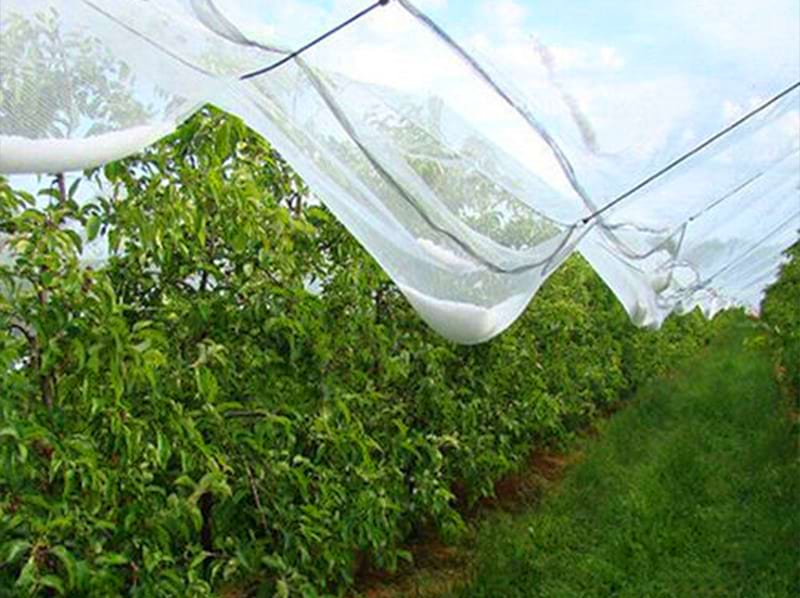


Commercial and organic growing practices are undergoing a massive transformation today. Growers are actively moving away from heavy chemical pesticide reliance. Instead, they are adopting structural, physical crop defense systems to protect their harvests. This shift directly addresses rising chemical costs and stricter food safety regulations globally. Using a reliable physical barrier stops insects before they ever reach your plants. This proactive strategy dramatically cuts crop loss and promotes much healthier yields overall. Incorporating Anti-insect Netting stands out as a primary investment for Integrated Pest Management (IPM), seed isolation, and ultimate yield protection. In this comprehensive guide, we will thoroughly evaluate essential specifications and operational tradeoffs. You will also learn about installation realities and key procurement criteria. By the end, you will know exactly how to select the right barrier system for your unique agricultural needs. Let us explore how you can secure your crops effectively while maintaining a vibrant farm ecosystem.
Key Takeaways
Target-Specific Sizing: Mesh sizes must align precisely with the target pest (ranging from 17-mesh for large insects to 50-mesh for thrips).
Environmental Tradeoffs: While allowing 80–90% light transmission and rainfall, netting traps humidity and blocks pollinators, requiring workflow adjustments.
Installation dictates efficacy: Covering crops after eggs are laid renders the netting useless; leaving structural slack and securing edges are non-negotiable.
Procurement priorities: Long-term ROI depends on UV-stabilized virgin materials and reinforced manufacturing techniques like tucked selvedges.
The Business Case: Why Transition to Physical Pest Barriers?
Growers face increasing pressure to deliver clean, pest-free produce. Transitioning to physical pest barriers offers a highly reliable solution. It replaces unpredictable chemical treatments with consistent structural defense. Here are the core reasons why agricultural professionals make this strategic transition.
Pesticide Reduction & Compliance: Chemical inputs are expensive and heavily regulated. Physical barriers eliminate the risk of toxic metabolites remaining on crops. This lowers your chemical input costs significantly over time. It also helps you meet strict organic and food-safe certifications effortlessly. Consumers actively seek out pesticide-free produce today. You can meet this lucrative demand by blocking pests physically.
Integrated Pest Management (IPM) Enhancement: Proper netting acts as a highly effective two-way barrier. It keeps devastating pests out of your growing area. Simultaneously, it traps introduced beneficial insects inside the greenhouse environment. Ladybugs and lacewings stay exactly where you need them most. This maximizes their predatory impact on minor pest outbreaks.
Seed Production Isolation: Seed breeders require absolute genetic purity to maintain crop integrity. Netting prevents accidental cross-pollination from neighboring crops effectively. It strictly controls pollinator access in designated hoop houses. You can isolate specific plant varieties easily. This guarantees pure seed lines for commercial distribution.
Microclimate Buffering: Pest exclusion is just the beginning. These structures provide excellent secondary benefits for your delicate crops. They act as windbreaks to protect fragile stems from snapping. They deflect heavy rain and hail during severe spring storms. They also prevent dirty soil splash on leafy greens. This keeps your harvested produce cleaner and healthier overall.
Decoding Mesh Sizes and Material Specifications
Choosing the right mesh size is critical for field success. A barrier is only effective if the holes are smaller than the target pest. You must match the net specifications directly to the insects threatening your specific crops. Upgrading to proper Anti-insect Netting requires a thorough understanding of standard industry measurements.
Standard Mesh (approx. 1.3mm – 1.4mm / 17 to 25 Mesh)
Standard mesh sizes generally range from 17 to 25 mesh. The hole sizes measure approximately 1.3mm to 1.4mm wide.
Target Pests: This size easily stops cabbage white butterflies, cabbage root flies, onion flies, wasps, and birds.
Application: Growers use this primarily for general field covers and vast orchards. It offers the highest airflow available among netting options. It also provides the lowest heat retention, making it perfect for hot summer use.
Fine and Ultra-Fine Mesh (approx. 0.8mm down to 0.25mm / 40 to 50 Mesh)
Smaller insects require much tighter physical barriers to prevent penetration. Fine and ultra-fine options range from 40 to 50 mesh. The holes measure tightly between 0.8mm and 0.25mm.
Target Pests: These tight nets block flea beetles, whiteflies, leaf miners, aphids, and thrips.
Application: They are ideal for high-value greenhouse vents and highly vulnerable row crops.
Advanced Features: Many premium nets now feature the integration of optical additives. Woven aluminum strips reflect UV light brightly across the canopy. This action blinds and disorients small pests like thrips before they can even land.
Material Integrity Features to Look For
Your netting must survive harsh agricultural environments year after year. Pay close attention to the manufacturing quality during your evaluation.
Always ensure the product is manufactured from UV-stabilized High-Density Polyethylene (HDPE) monofilament.
Look for tucked selvedges on the outer borders. These reinforced edges prevent rapid unraveling in the field. They easily withstand immense mechanical stress during repeated seasonal use and heavy winds.
Anti-Insect Netting Mesh Size Guide | |||
Mesh Type | Hole Size (mm) | Target Pests Blocked | Best Application |
|---|---|---|---|
17 - 25 Mesh | 1.3 - 1.4 | Butterflies, Root Flies, Wasps, Birds | Field covers, Orchards |
40 Mesh | 0.8 | Flea Beetles, Aphids, Whiteflies | Vulnerable row crops |
50 Mesh | 0.25 | Thrips, Leaf Miners | Greenhouse vents |
Operational Realities: Pros and Cons
Every agricultural tool introduces new workflow dynamics to your farm. While physical barriers offer immense protection, they also change how you manage your fields. Understanding these operational realities early prevents costly surprises mid-season.
Proven Advantages
The operational benefits extend far beyond simple pest exclusion.
Low Thermal Gain: Unlike frost fleece, insect netting causes minimal temperature increases underneath. This low thermal gain makes it highly viable for mid-summer crop protection. You can safely cover heat-sensitive crops like potatoes and leafy greens without baking them.
High Permeability: These woven structures allow up to 90% light transmission. They also permit overhead irrigation or heavy rainfall to penetrate freely. You do not need to remove the heavy covers just to water your thirsty plants.
Implementation Risks & Downsides
You must adapt your farm management strategies to mitigate potential downsides.
Humidity & Disease Traps: Tighter mesh reduces natural airflow across the crop canopy. This can rapidly elevate under-canopy humidity levels. If you do not ventilate properly, you increase the risk of fungal diseases. Watch your plants closely for Botrytis (grey mold) or downy mildew outbreaks.
Pollinator Exclusion: Physical barriers keep all insects out, including the highly helpful ones. They are completely incompatible with blooming crops requiring natural insect pollination. You cannot cover strawberries or zucchini during bloom unless you change tactics. You must either hand-pollinate or supplement with commercial bumblebee hives under the net.
Access Friction: Daily field operations will take slightly longer to complete. The barrier increases labor time for mid-season weeding, pruning, or harvesting. Your field team will need to repeatedly unseal and reseal the barriers carefully.
Field vs. Greenhouse: Installation and Maintenance Best Practices
Even the highest quality barriers fail completely if installed incorrectly. Pests will find any small gap or weakness in your physical perimeter. Proper deployment differs significantly between rigid greenhouse structures and open field environments.
Greenhouse Retrofitting
Greenhouses require permanent, incredibly tight seals to function well. These nets are best deployed over side vents, ridge vents, and wide doorways. You should use standard spring-and-lock channel systems, commonly known as wiggle wire. This specialized hardware maintains tight, gap-free tension across the entire frame. It permanently prevents high winds from tearing the material away from your crucial vents.
Row Crop & Hoop House Deployment
Field installation requires careful timing and strict farm protocols.
You must install the barrier immediately post-sowing or immediately post-transplanting. Pre-installation field scouting is absolutely critical for success. Trapping existing eggs under the net guarantees total crop failure in a few weeks.
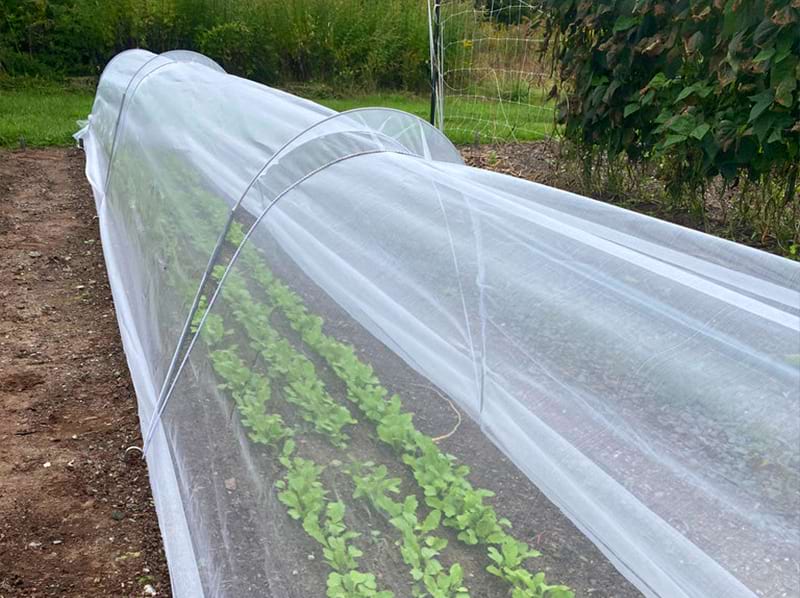
You can lay the fabric directly on hardy, robust plants. Alternatively, you can support it using low metal hoops to prevent physical abrasion on delicate crop leaves.
The "Slack" Requirement
When used as a floating row cover, netting must never be pulled taut. You must leave excess slack to accommodate future vertical plant growth. Experts often recommend leaving an extra 10 feet in total length. This extra material gives the crop room to push upward. It also effectively absorbs minor material shrinkage caused by intense sun exposure over time.
Ground Sealing
A field barrier is only as strong as its outer edges. You must completely seal all ground edges using heavy soil, sandbags, or rocks. Even a tiny one-inch gap compromises the entire protective system. Ground pests will simply crawl underneath loose sections to access the sweet crop.
How to Evaluate and Source Commercial Anti-Insect Netting
Procuring the right materials directly determines your long-term return on investment. Do not simply buy the absolute cheapest option available online. You must carefully evaluate suppliers based on specific manufacturing standards to ensure true durability.
Raw Material Quality
Always ensure the product is made from 100% virgin HDPE. Avoid materials blended with recycled plastics at all costs. Recycled polymers degrade rapidly under intense agricultural UV exposure. Virgin HDPE guarantees reliable strength and flexibility over multiple challenging seasons.
Weight vs. Strength
You must evaluate the gram-per-square-meter (GSM) rating carefully. The net must be lightweight enough not to crush tender crops beneath it. However, it must remain exceptionally strong enough to resist severe wind tearing. Finding this perfect balance is crucial for unsupported floating row covers.
Warranty and Lifespan
Quality manufacturers always stand firmly behind their agricultural products. Look for manufacturers offering minimum 3- to 5-year UV degradation warranties. This extended lifespan makes the initial capital investment much more palatable for commercial operations.
Customization Capabilities
Actual field dimensions are rarely perfect out in the elements. Favor suppliers who offer custom lengths and factory-finished hems. Factory hems prevent rapid unraveling much better than messy field cuts. This customization significantly reduces on-site modification errors and stops frustrating material fraying permanently.
Conclusion
Selecting the perfect crop barrier fundamentally transforms how you manage farm pests. We highly recommend matching the mesh size directly to the smallest target pest in your specific region. You must also prepare for slight operational changes regarding humidity management and crop pollination workflows. Always invest heavily in UV-stabilized virgin materials to ensure maximum longevity in the field.
While the initial capital expenditure is higher than seasonal chemical treatments, the math works out favorably. The multi-season lifespan and guaranteed yield protection provide a strong, highly predictable ROI. Transitioning to physical barriers protects your pristine harvest, your farm workers, and your bottom line. Take action today by evaluating your most vulnerable crops and sourcing proper netting before the next major pest flight arrives.
FAQ
Q: How long does anti-insect netting last?
A: With proper handling and careful winter storage, commercial-grade UV-stabilized netting typically lasts 3 to 5 growing seasons. Virgin HDPE materials resist sunlight degradation much better than cheaper recycled plastics, ensuring long-term structural reliability.
Q: Will insect netting protect crops from birds, mice, or deer?
A: It acts as a great visual and light physical barrier against birds and rabbits if the ground edges are firmly secured. However, rodents like squirrels and mice can chew right through it. It provides absolutely no defense against heavy animals like deer, which require tall, rigid fencing.
Q: Does the color of the netting matter?
A: Yes. White or transparent netting is the industry standard. It avoids altering the natural light spectrum and maximizes total light transmission. It also makes routine pest scouting much easier compared to viewing through dark or heavily colored nets.
Q: Can I water my plants through the netting?
A: Yes. The woven gaps allow overhead irrigation and natural rainfall to pass directly through without requiring removal. However, you should note that extremely fine mesh (like 50-mesh) will break heavy water droplets down into a much finer mist.