


Key Takeaways
A safety fence is very important. It shows where the work area ends. It keeps workers and others safe from dangers at the site.
It is important to check safety fences often. Look for loose panels and damage every week. This helps keep everyone safe.
Picking the right fence for the site is important. It can lower the chance of accidents and injuries.
Following local rules for fence height and materials is smart. It helps you avoid legal trouble. It also makes the site safer.
A good safety fence keeps people safe. It also protects equipment. It helps the construction site look good to others.
Why Safety Fences Matter
Site Hazards
There are many dangers at a construction site. Some dangers are easy to see. Others can surprise you. A safety fence helps you know where work stops. It keeps you away from risky places. Here is a table that lists common hazards you may find:
Hazard Type | Overview | Mitigation Strategies |
|---|---|---|
Falls from Heights | This is the top cause of deaths in construction. It causes about one-third of deaths. | Put up guardrails, use fall arrest gear, teach safety, check ladders and scaffolds. |
Struck-by Object Accidents | These happen when things fall or vehicles hit workers. | Add toe boards, wear hard hats, make clear paths for vehicles, secure tools and materials. |
Electrocution | This is a big danger with power lines or electrical tools. | Turn off circuits, use GFCIs, stay away from power lines, teach electrical safety. |
Caught-In/Between Hazards | Workers get caught or crushed by machines or materials. | Use machine guards, make trenches safe, keep away from heavy equipment, do safety checks. |
Slips, Trips, and Falls | Uneven ground and debris cause injuries. | Clean work areas, add good lighting, wear safe shoes, put in walkways. |
Tip: Always watch for warning signs and barriers. They help you stay away from danger before you get too close.
Risk Reduction
You can lower injury risk by using the right safety fence. A strong barrier keeps people out of unsafe areas. In 2023, over 200,000 workers got hurt in U.S. construction. Many injuries happened because fences were not stable. If fences are loose, people can trip and fall. From 2016 to 2018, 45% of fence injuries made workers miss over a month of work. Sprains, strains, and tears are the most common injuries. These often happen when someone trips over a loose fence.
A good safety fence does more than show the site edge. It protects you from moving vehicles, falling things, and live wires. It also keeps kids and others from walking into danger. When you pick the right fence and check it often, you help keep everyone safe.
Safety Fence Benefits
Accident Prevention
A safety fence can stop many accidents from happening. When you put up a strong barrier, you keep workers and visitors safe. The fence shows where the site ends, so people know not to enter. Drivers can also see where the work area starts and stops. Fences work with signs and lights to make things safer. Signs warn people about dangers, and lights help at night. All these things help keep everyone safe.
Tip: Always make sure your fence is strong and signs are clear. Doing this can stop many people from getting hurt.
Public Protection
A safety fence helps more than just workers. It keeps the public safe too. The fence stops people from walking into the site by accident. It also protects people nearby from falling things or moving machines. Here are some ways fences help the public:
Stop people who should not enter the construction area.
Lower the chance of accidents for people walking by.
Help people and cars see better near the site.
Safety experts say fences are very important for safety. They help keep workers, visitors, and neighbors safe. Temporary fences also keep out people who should not be there.
Compliance
You have to follow rules for fences at every construction site. These rules help keep everyone safe. The table below shows some basic rules:
Requirement Type | Height Requirement | Material Requirement |
|---|---|---|
Residential Construction | At least 4 feet | Any material (temporary panels work) |
Commercial/Industrial Sites | At least 6 feet | Sturdy material (chain link or iron) |
If you do not follow the rules, you could have problems:
You might be blamed if someone gets hurt.
Emergency workers may not reach the site fast.
When you use the right fence and follow the rules, you help keep everyone safe and avoid legal trouble.
Types of Safety Fence
You have many choices for fences at a construction site. Each kind has special things that help keep people safe. Different fences work for different needs. Below we mainly introduce the main types of fences commonly found on most construction sites----plastic fencing.
Plastic Fencing
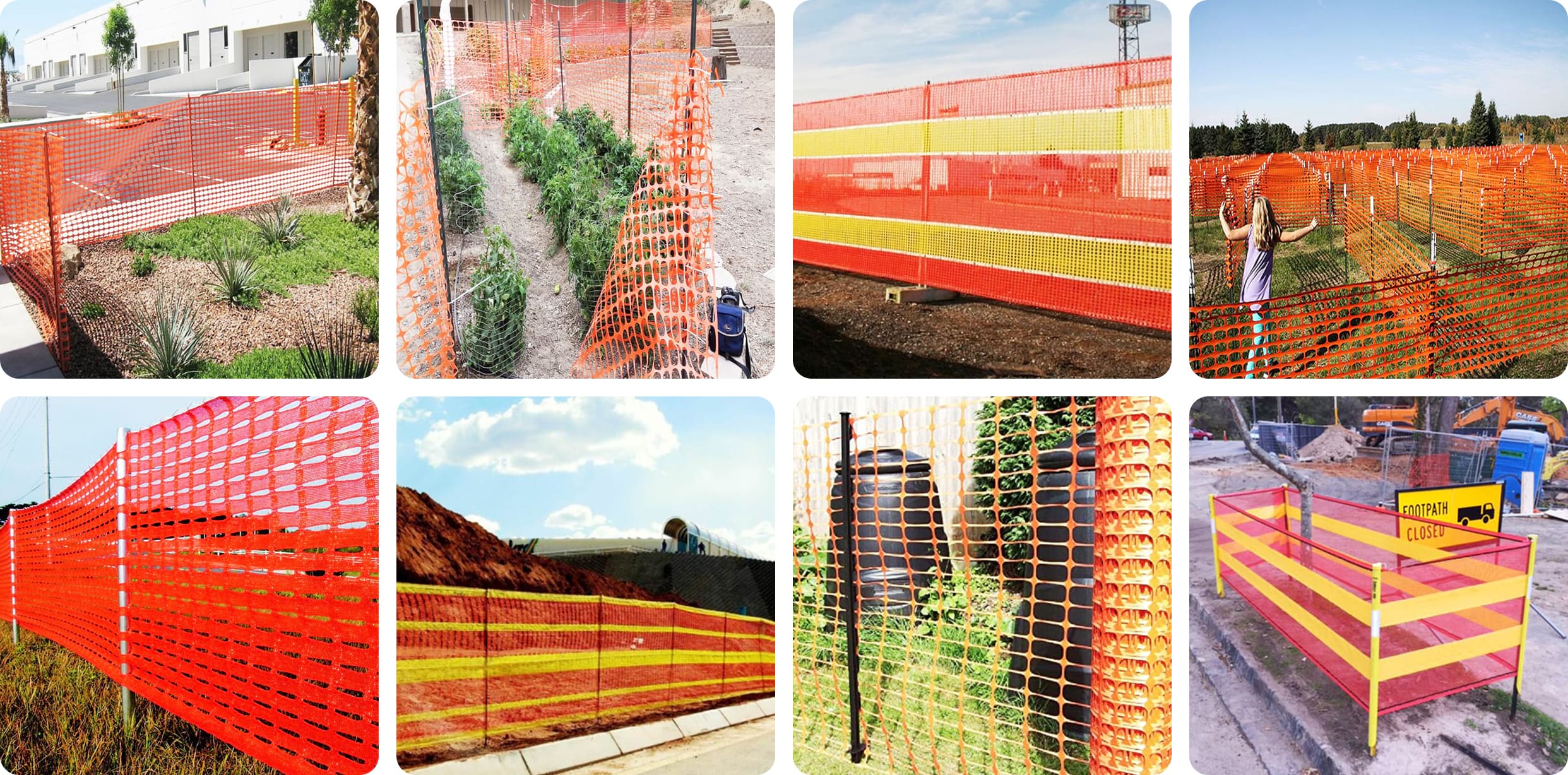
Plastic fencing is used a lot on construction projects. You often see bright orange fences or diamond shapes near roadwork. These fences are easy to spot because of their color. People can see them from far away. You can put them up fast and move them when your project changes.
HDPE fencing is very strong. It does not rot or break. Rain, snow, and sun do not hurt it. This fence keeps its color and shape in bad weather. Bugs and water do not cause problems. These last a long time and are cheap to take care of.
Plastic fencing is light. You can carry and set it up without special tools. This makes it good for short jobs or places where you move the fence a lot.
Choosing and Installing Safety Fence
Site Assessment
Before you choose a safety fence, you need to look at your site closely. Every construction site is different. You must think about several things to pick the right fence. Here are some key points to check:
Site size: Measure your site. A bigger area may need stronger or taller fencing.
Security needs: Decide how much protection you need. Some sites need fences that stop people from climbing or breaking in.
Local regulations: Check the rules in your area. Some places require certain types of fences or materials.
Material specifications: Some jobs need fences made from special materials for extra safety.
Visibility requirements: Pick a fence that people can see easily. Bright colors or reflective strips help everyone notice the fence.
Tip: Always review local laws before you buy or install a fence. This helps you avoid fines and keeps your site safe.
Installation Tips
You must install your fence the right way to keep everyone safe. If your site has hills or uneven ground, follow these steps:
Prepare the site. Clear away rocks, trash, and anything that could make the fence unstable.
Start at the highest point. Place your first panel here and make sure it is level.
Align each panel. Secure the bottom of each panel and use clamps if you see gaps.
Anchor key points. Use star pickets or concrete blocks to hold the fence steady.
Check for weak spots. Walk along the fence and look for loose panels or gaps.
Add extra weight if needed. On steep slopes, put more weight at the base to stop the fence from tipping.
Workers should get training before they install or fix fences. Training should cover fall protection, OSHA rules, and how to use safety gear.
Maintenance
You need to check your fence often to keep it working well. The table below shows how often you should inspect different types of fences:
Fence Type | Inspection Frequency |
|---|---|
Wooden Fences | Quarterly checks |
Vinyl Fences | Biannual inspections |
Metal Fences | More frequent in humid areas |
Wooden Fences | Less frequent in dry climates |
Look for broken parts, loose posts, or missing panels. Fix problems right away. A well-kept safety fence protects everyone on and near your site.
Real-World Impact
Case Studies
You can see how a safety fence helps by looking at real sites. Many projects use fences to stop accidents and keep people safe. Here are some examples:
Example | Benefit |
|---|---|
Temporary fencing around excavations | Stops people from entering and lowers injury risks. |
Fencing as a deterrent for theft | Makes sites less tempting for thieves, so less equipment is stolen. |
Clear boundaries for public safety | Keeps people safe from dangers and shows you follow the rules. |
Big projects often use security barriers. These barriers help control cars and crowds. They guide people and vehicles safely. This lowers the chance of accidents. Barriers show safe zones. Workers stay away from dangerous places. This helps you follow safety rules. In busy areas, fences keep people safe and help work go well.
Note: Using the right fence shows you care about safety and follow the law.
FAQ
What is the main purpose of a safety fence on a construction site?
A safety fence marks the work area. You use it to keep workers and the public away from danger. It helps prevent accidents and shows clear site boundaries.
How often should you inspect your safety fence?
You should check your fence at least once a week. After storms or strong winds, inspect it right away. Look for loose panels, gaps, or damage.
Can you reuse temporary safety fences for other projects?
Yes, you can reuse many types of temporary fences. Make sure you inspect them for damage before each use. Clean and store them properly to make them last longer.
What should you do if your safety fence gets damaged?
Fix or replace broken parts as soon as possible.
Check the whole fence for other weak spots.
Report any big problems to your site manager.


